
Few weapons capture the drama and intensity of battlefield combat quite like the Civil War cavalry sword. Forged for speed, power, and close-quarters combat, these swords were more than just weapons—they were symbols of authority, skill, and survival.
From the iconic Union cavalry sword to the widely recognized cavalry saber 1860, these blades played a critical role in shaping cavalry tactics during the American Civil War. Whether you’re a collector, historian, or enthusiast, understanding these swords offers a fascinating glimpse into military innovation and battlefield strategy.
In this guide, we’ll explore the history, types, uses, and evolution of cavalry swords—while also connecting them to earlier designs like Roman cavalry swords and the influential heavy cavalry sword 1796.
The History of Civil War Cavalry Swords
The story of the US cavalry sword Civil War era begins long before the 1860s. Cavalry units had relied on edged weapons for centuries, but by the time of the American Civil War (1861–1865), sword design had reached a refined balance between cutting power and maneuverability.
The Union cavalry sword was heavily influenced by European designs, particularly French sabers. One of the most significant predecessors was the heavy cavalry sword 1796, a British blade known for its curved shape and devastating slashing ability.
As warfare evolved, so did sword design. By the Civil War, cavalry swords were optimized for mounted combat—long, slightly curved blades that allowed soldiers to strike effectively while riding at speed.
The Famous Cavalry Saber 1860
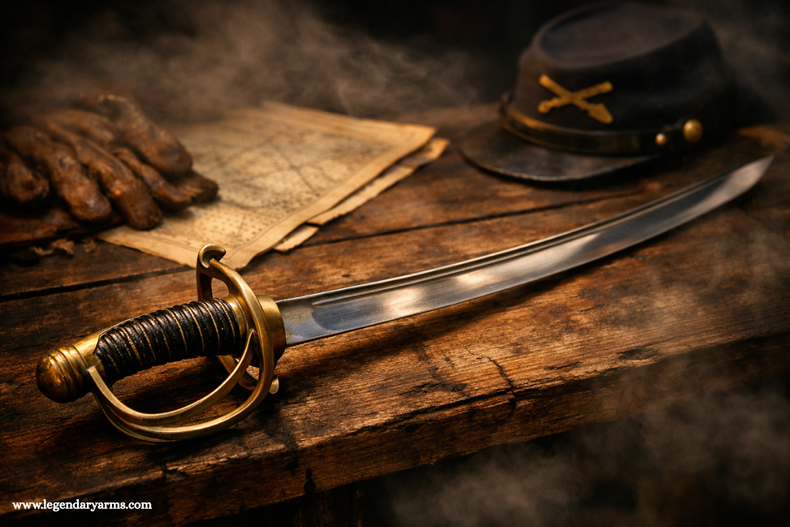
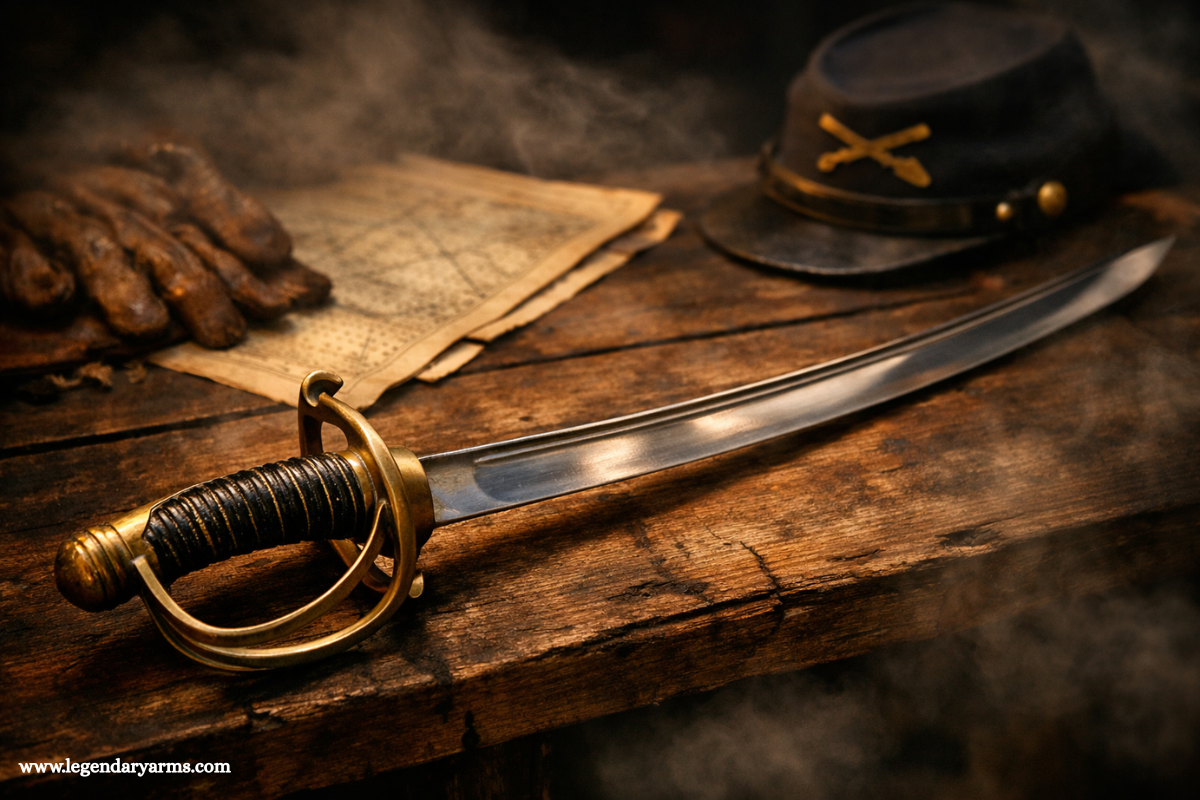
The cavalry saber 1860 is arguably the most iconic sword of the Civil War. Officially known as the Model 1860 Light Cavalry Saber, it became the standard-issue weapon for Union cavalry troops.
Key Features:
- Slightly curved blade for effective slashing
- Lightweight compared to earlier heavy sabers
- Brass guard for hand protection
- Designed for speed and agility
This saber replaced heavier designs, allowing cavalry soldiers to engage quickly and efficiently. Its balance made it ideal for both offensive strikes and defensive maneuvers, cementing its place in military history.
Types of Civil War Cavalry Swords
Understanding the different types of heavy cavalry swords and lighter variants helps reveal how battlefield roles influenced weapon design.
1. Light Cavalry Swords
Light cavalry units required speed and flexibility. Their swords, like the cavalry saber 1860, were designed for quick strikes and rapid movement.
Characteristics:
- Slim, curved blades
- Lightweight construction
- Ideal for reconnaissance and skirmishes
2. Heavy Cavalry Swords
The heavy cavalry sword 1796 represents one of the most powerful sword designs ever used. These blades were built for impact—capable of delivering devastating cuts during charges.
Characteristics:
- Thick, broad blades
- Heavier weight for maximum force
- Designed for shock combat
Although less common during the Civil War, these swords influenced later designs and remained in limited use.
3. Union Cavalry Sword Variants
The term Union cavalry sword encompasses several models used by Union troops, but most were variations of the Model 1860 saber.
Notable traits:
- Standardized production
- Durable materials
- Functional design over decoration
These swords were mass-produced to equip thousands of soldiers, making them one of the most recognizable weapons of the war.
Influence of Earlier Cavalry Weapons
The evolution of cavalry swords didn’t begin in the 19th century. In fact, Roman cavalry swords, particularly the spatha, laid the groundwork for later designs.
Roman Influence:
- Longer blades than infantry swords
- Optimized for mounted combat
- Straight design for thrusting
Over time, these straight blades evolved into curved sabers, which proved more effective for slashing attacks from horseback. This transition ultimately led to iconic designs like the US cavalry sword Civil War era weapons.
How Cavalry Swords Were Used in Battle
Cavalry swords were not ceremonial—they were practical tools of war used in intense, close-range combat.
Combat Techniques:
- Slashing attacks: The curved blade allowed sweeping strikes at enemies
- Charging strikes: Used during high-speed cavalry charges
- Defensive parries: Soldiers used the blade to block incoming attacks
Unlike firearms, which required reloading, swords provided continuous offensive capability. This made them especially valuable during chaotic engagements.
Why the Union Cavalry Sword Stood Out
The Union cavalry sword became the standard due to its balance of performance and practicality.
Advantages:
- Easier handling compared to heavier swords
- Efficient in both offense and defense
- Adaptable to different combat scenarios
Its widespread use made it a defining weapon of the Civil War, and today it remains a prized collectible among historians and enthusiasts.
Collecting Civil War Cavalry Swords Today
Interest in Civil War swords has grown significantly, especially among collectors seeking authentic historical artifacts.
What to Look For:
- Original markings and stamps
- Blade condition and curvature
- Manufacturer details (e.g., Ames Manufacturing Company)
Authentic US cavalry sword Civil War pieces can hold significant historical and monetary value. Reproductions are also popular for display and reenactment purposes.
Legacy of Cavalry Swords
Even as firearms advanced, cavalry swords retained symbolic importance. They represented leadership, courage, and tradition.
Modern military sabers still reflect the design principles of historical blades like the cavalry saber 1860 and earlier heavy cavalry swords.
Their influence can also be seen in ceremonial swords used by military officers today.
Conclusion
The Civil War cavalry sword is more than just a weapon—it’s a powerful symbol of a transformative period in history. From the agile cavalry saber 1860 to the formidable heavy cavalry sword 1796, these blades tell a story of innovation, adaptation, and survival.
Understanding their history, types, and battlefield use provides valuable insight into how warfare evolved—and why these swords continue to captivate collectors and historians alike.
If you’re passionate about historical weapons or looking to add an authentic piece to your collection, exploring Union cavalry sword models is a great place to start.