
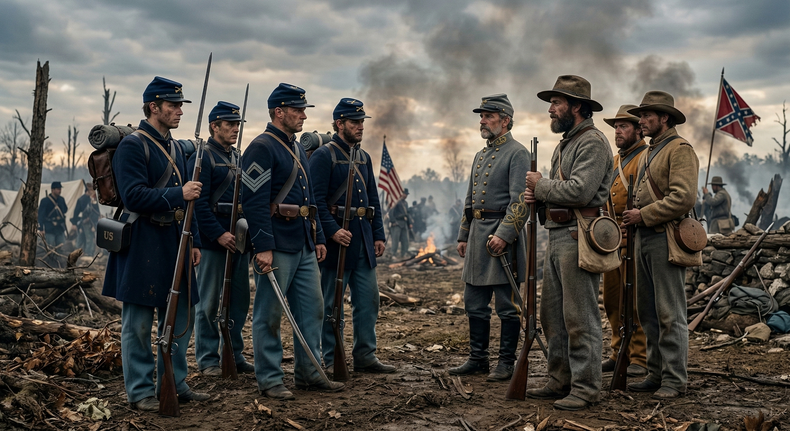
The American Civil War remains one of the most defining conflicts in United States history. When people ask when civil war happened, historians point to the years 1861–1865, when the Union and the Confederacy fought a brutal war that shaped the nation’s future.
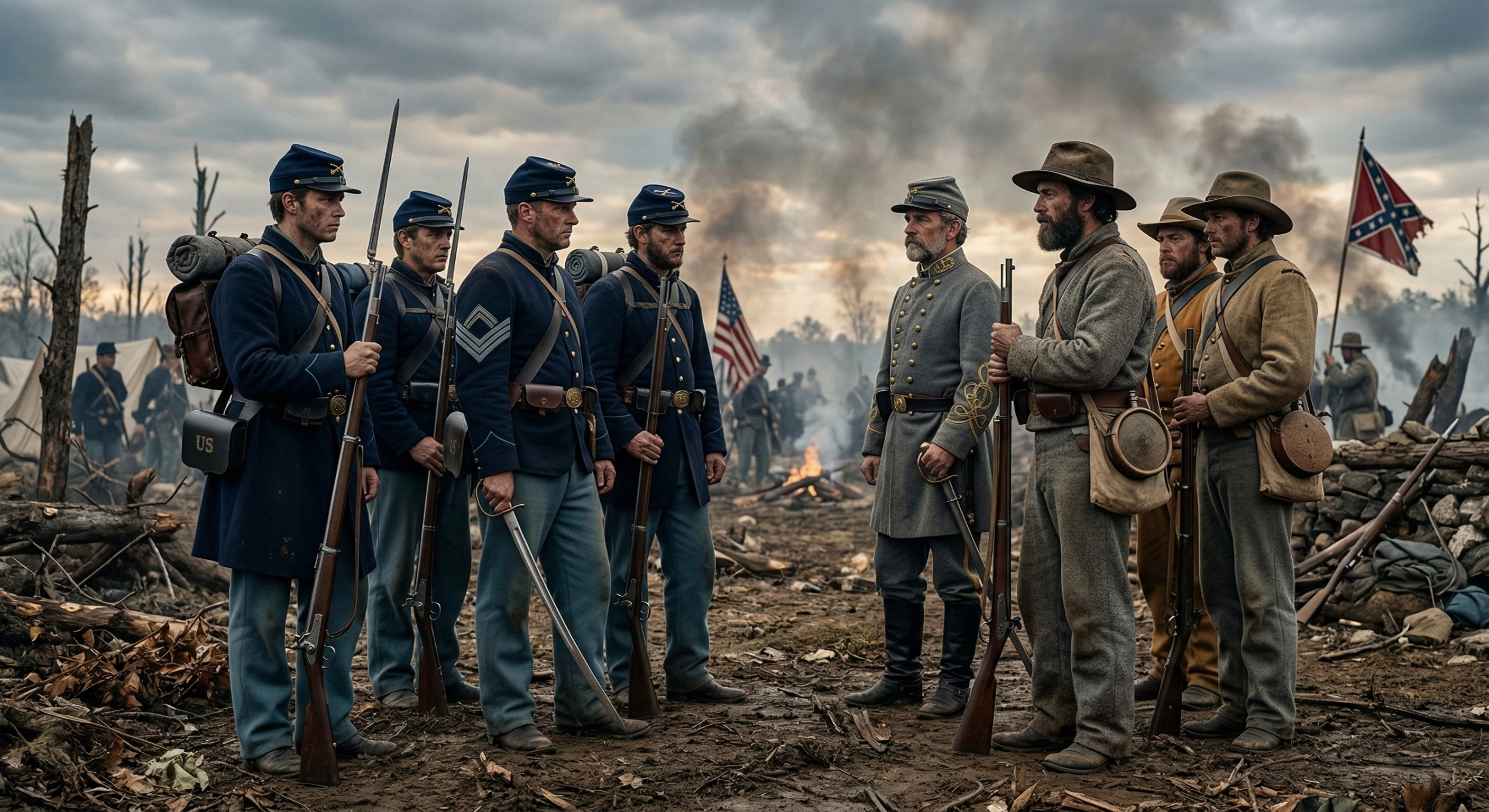
Beyond battlefield strategies and politics, one of the most recognizable elements of the conflict was the soldiers’ appearance. The civil war uniforms worn by Union and Confederate troops were more than simple clothing—they represented identity, loyalty, and military organization.
From the iconic civil war union army uniform in deep blue wool to the rugged confederate uniform often dyed gray or butternut, civil war attire reveals a fascinating story about resources, logistics, and battlefield life. These uniforms were also paired with essential us civil war weapons, including rifles and civil war swords, which completed the image of a 19th-century soldier.
When the Civil War Happened and Why It Matters
To understand the significance of civil war uniforms, it is important to know when civil war events occurred. The American Civil War lasted from 1861 to 1865 and began after eleven Southern states seceded from the Union to form the Confederate States of America.
The conflict revolved around major political and social issues such as slavery, states’ rights, and economic power. More than three million soldiers served during the war, making it one of the largest military conflicts in American history.
Uniforms became essential on the battlefield. They helped soldiers identify allies and enemies, especially during chaotic battles. Uniforms also created a sense of unity and discipline within military ranks. Over time, distinct civil war attire helped clearly separate Union and Confederate forces.
Overview of Civil War Attire
The civil war attire worn by soldiers was designed for both practicality and identity. A typical set of civil war uniforms included a military coat or jacket, wool trousers, a shirt, boots, and a kepi or slouch hat.
These garments were built for durability. Soldiers marched long distances and fought in difficult conditions, so clothing had to withstand harsh environments.
Uniforms also displayed military structure. Colors, buttons, and insignia often indicated a soldier’s regiment or rank. Officers typically carried additional equipment such as pistols and civil war swords, which symbolized command and authority.
Union Army Uniform
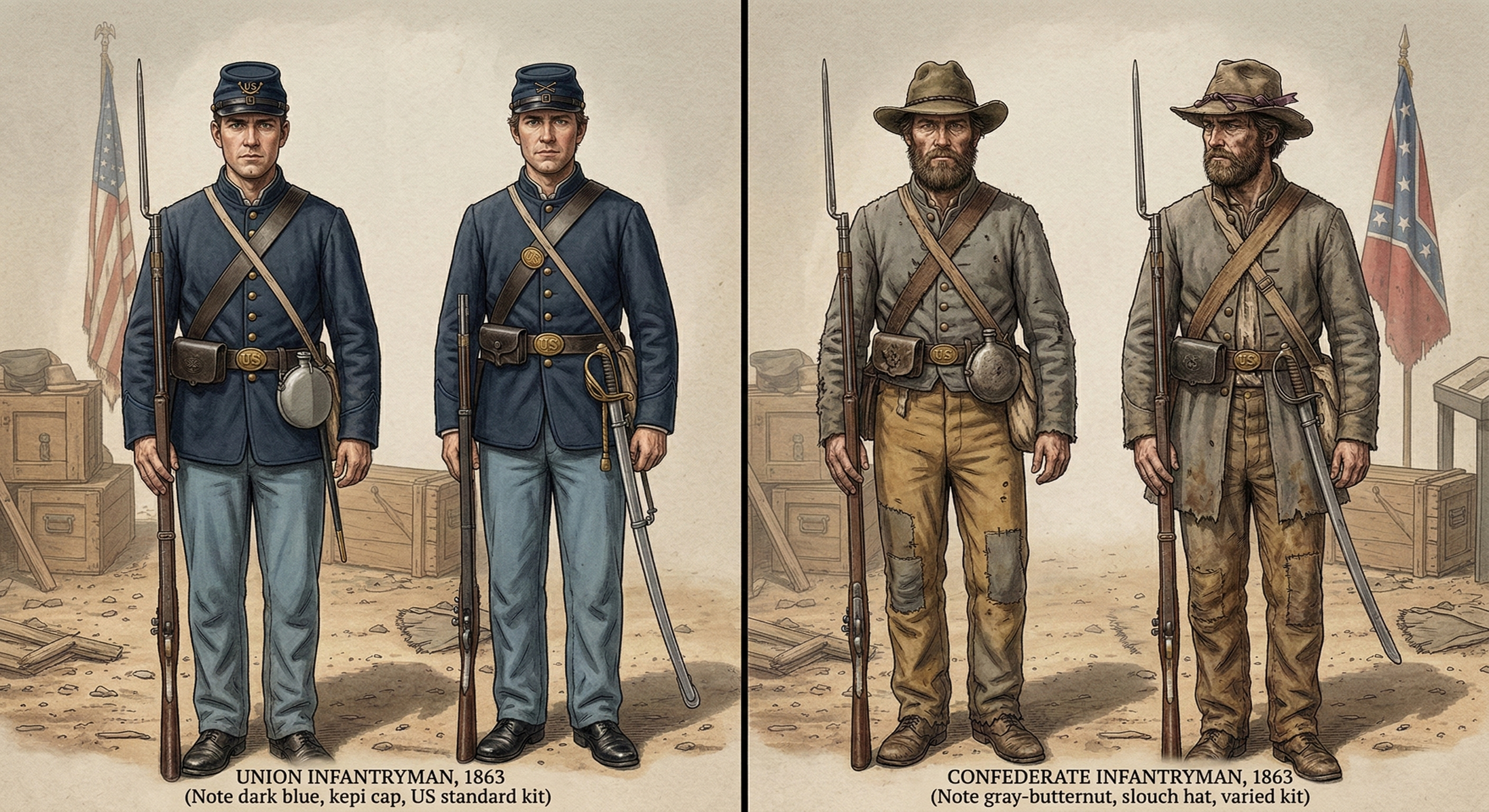
The civil war union army uniform is one of the most recognizable outfits in American military history. Union soldiers typically wore dark blue wool coats paired with light blue trousers.
A standard uniform included a sack coat, wool trousers, black leather brogans, and a kepi cap inspired by French military fashion. Officers often wore more decorated coats with brass buttons and shoulder insignia.
One major advantage for the Union was its industrial strength. Northern factories produced standardized civil war uniforms in large quantities. This allowed the federal army to supply troops with consistent clothing and equipment.
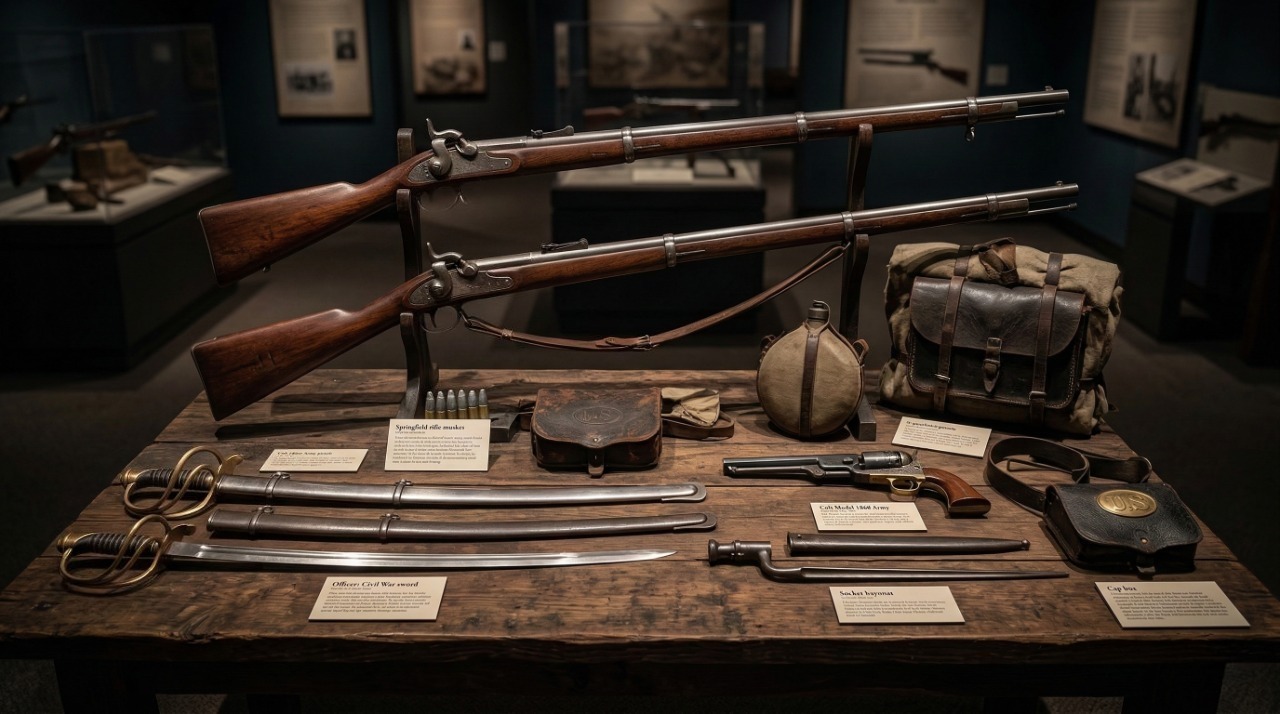
Union soldiers also carried several us civil war weapons, including Springfield rifle-muskets and bayonets. Officers frequently carried civil war swords, which were used both as weapons and symbols of leadership.
Confederate Uniform
The confederate uniform differed greatly from the Union’s standardized clothing. While gray uniforms are commonly associated with Confederate soldiers, the reality was more varied.
Confederate troops often wore gray, brown, or butternut-colored clothing. Butternut dye came from natural plant sources and produced a light brown appearance.
The Confederacy struggled with manufacturing and supply shortages. Without large factories, many uniforms were handmade or produced locally. Some soldiers even wore modified civilian clothing as part of their civil war attire.
Despite these challenges, Confederate troops carried similar civil war weapons used during the conflict, including rifles, pistols, and civil war swords carried by officers.
Union vs Confederate Uniforms – Key Differences
The differences between the civil war union army uniform and the confederate uniform reveal how resources shaped the war.
Union uniforms were easily recognized by their dark blue coats and light blue trousers. Confederate soldiers usually wore gray or butternut clothing, though variations were common.
Fabric quality also differed. Union uniforms were mass-produced from durable wool in Northern factories. Confederate clothing often used homespun materials or locally sourced fabrics.
Standardization was another key difference. The Union army issued consistent civil war uniforms, while Confederate clothing varied widely between units.
Both armies carried similar us civil war weapons, including rifles, bayonets, and pistols. Officers on both sides often carried civil war swords, which symbolized authority and rank.
Weapons and Equipment Carried by Soldiers
Along with their civil war uniforms, soldiers carried a wide range of civil war weapons used in combat. The most common us civil war weapons were rifled muskets such as the Springfield Model 1861 and the British Enfield Pattern 1853.
These rifles allowed soldiers to fire with greater accuracy and range than earlier weapons. They became the primary firearm used during the war.
However, civil war swords were still important. Cavalry soldiers used sabers during mounted charges, while officers carried swords as symbols of command.
In addition to rifles and swords, soldiers carried pistols, bayonets, cartridge boxes, and other essential field gear.
Authentic Civil War Sword Value for Collectors
Today, collectors and historians remain fascinated by original civil war weapons, particularly swords. The authentic civil war sword value depends on several factors including authenticity, condition, and historical significance.
Many collectors seek original civil war swords because they represent real artifacts from the battlefield. Swords linked to famous officers or battles can be especially valuable.
Cavalry sabers, officer dress swords, and naval cutlasses are among the most sought-after items. These historical pieces continue to attract collectors, historians, and reenactors interested in Civil War history.
Final Thought
The civil war uniforms worn by soldiers during the American Civil War represented more than simple clothing. They reflected identity, loyalty, and the realities of wartime logistics.
The civil war union army uniform, with its standardized blue design, demonstrated the industrial strength of the North. In contrast, the confederate uniform, often gray or butternut, showed the supply challenges faced by the South.
Combined with the us civil war weapons carried by soldiers—including rifles, bayonets, and civil war swords—these uniforms formed the complete image of a Civil War soldier.
Today, historians, collectors, and reenactors continue to study civil war attire to better understand the experiences of the men who fought between 1861 and 1865.