
American Civil War Soldiers: What They Carried Into Battle
The American Civil War (1861–1865) reshaped a nation and claimed over 620,000 lives. Behind every major battle stood ordinary men—farmers, clerks, and laborers—carrying everything they needed to fight and survive on their backs.
For American Civil War soldiers, equipment was not a formality; it was survival. Every canteen, cartridge, and wool blanket determined whether a soldier could march, fight, and live through another day. Understanding what they carried reveals the raw, unglamorous reality of Civil War life on both sides of the conflict.
The Standard Equipment of American Civil War Soldiers
Essential Military Gear
Every infantryman carried a core set of personal equipment regardless of which side he fought on:
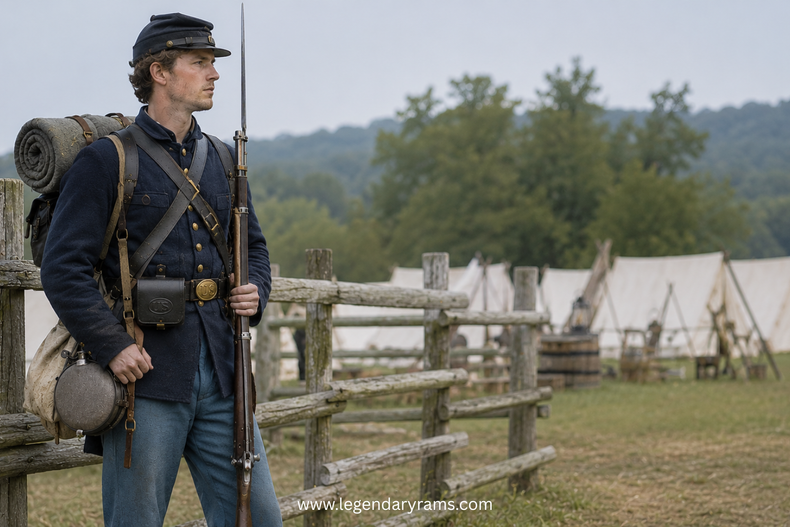
Knapsack: The main pack, made of canvas or leather, storing extra clothing and personal items.
Haversack: Haversack is ashoulder bag used exclusively to carry food rations, kept separate from military gear.
Canteen: Critical for hydration during long summer marches. Union soldiers received standardized tin canteens; Confederate soldiers often improvised with wood or gourd versions.
Blanket or bedroll: A wool blanket rolled and slung across the body served as both insulation and bedding. Union troops more commonly received rubber groundsheets to stay dry.
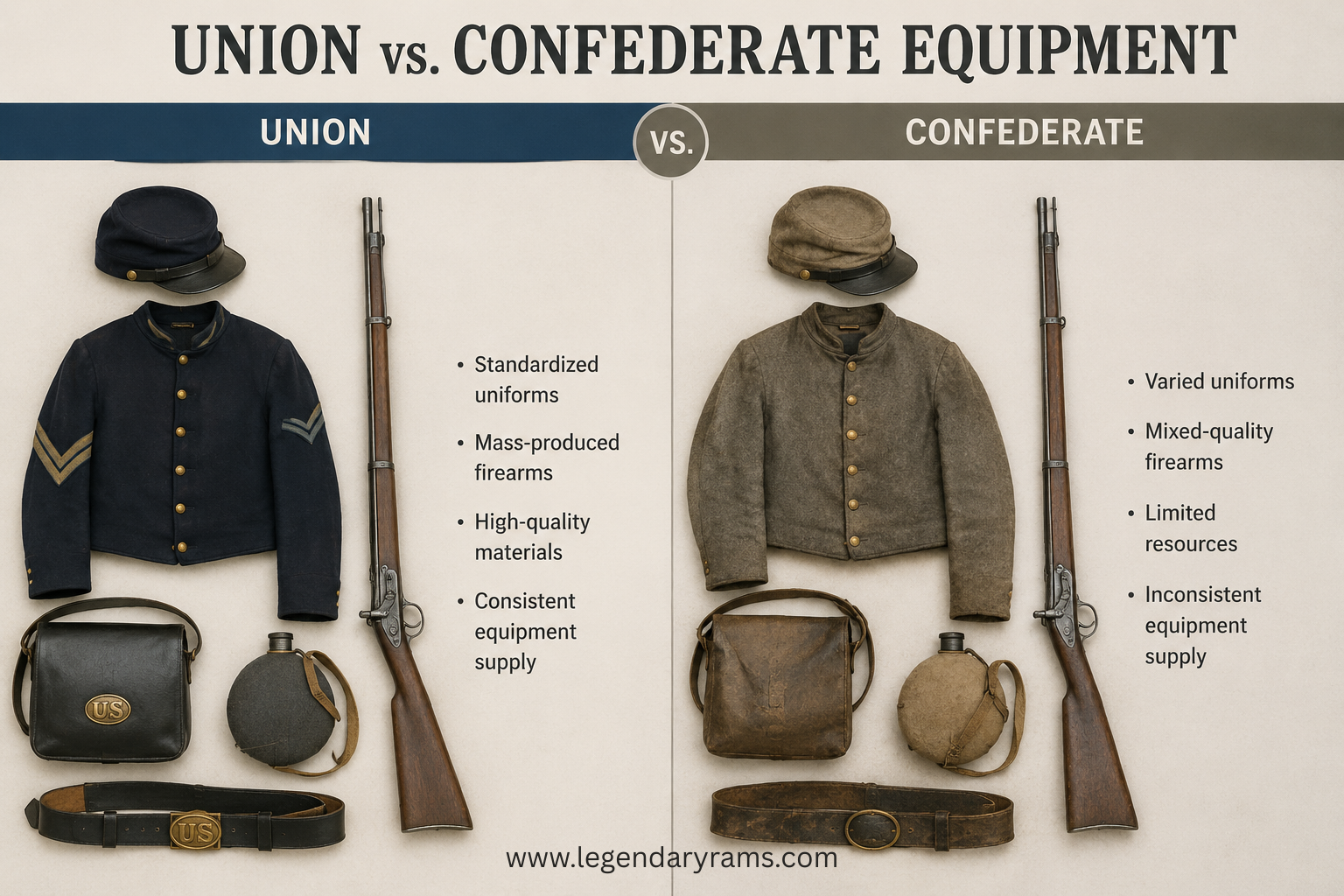
Union vs. Confederate Equipment
American Civil War Union soldiers benefited from industrialized Northern supply chains. Equipment was standardized, regularly resupplied, and generally reliable throughout the war.
American Civil War Confederate soldiers faced constant shortages. The South lacked comparable manufacturing, and naval blockades cut off imports. Confederate troops routinely entered battle with mismatched gear, repaired uniforms, and captured Union equipment. Shortages in boots, blankets, and ammunition eroded Confederate fighting capacity—particularly in the war's final years.
Weapons Carried Into Battle
Rifled Muskets
The rifled musket transformed Civil War combat. Unlike smoothbore predecessors, rifled barrels gave bullets a spin, extending accurate range to 500 yards and forcing commanders to rethink traditional massed-charge tactics.
Springfield Model 1861: The standard Union infantry rifle, firing a .58-caliber Minié ball. Reliable and mass-produced, it formed the backbone of Federal firepower.
Enfield Pattern 1853: Used by both armies, this British-made rifle was accurate and durable. The Confederacy imported large numbers through blockade runners to supplement domestic production.
Bayonets and Sidearms
Every infantryman carried a bayonet fixed to his rifle's muzzle. Despite their fearsome reputation, bayonets caused a small fraction of actual combat wounds—their value was largely psychological.
Officers and cavalry carried revolvers such as the Colt Army Model 1860 or Remington Model 1858. These repeating sidearms were essential for fast-moving engagements where reloading a musket was impossible. Elite sharpshooter units, like Berdan's Sharpshooters, carried scoped target rifles for long-range precision work.
Ammunition and Combat Supplies
Cartridge Boxes and Ammunition
Ammunition management was a battlefield priority. Soldiers used paper cartridges—a paper tube containing a Minié ball and measured powder charge. A trained soldier bit open the cartridge, poured powder into the barrel, and rammed the ball home, achieving roughly three rounds per minute.
Leather cartridge boxes worn on the belt held 40 rounds. During intense engagements like Gettysburg or Antietam, soldiers exhausted ammunition rapidly, making resupply a tactical urgency.
Additional Combat Gear
Percussion caps: Small brass caps that ignited the powder charge, carried in a belt pouch.
Bayonet scabbards: Leather sheaths protecting the bayonet when not in use.
Gun maintenance tools: A rifle tool for field cleaning prevented misfires at critical moments—essential for every soldier's survival.
Uniforms and Protective Clothing
Union Army Uniforms
American Civil War Union soldiers wore dark blue wool uniforms—a four-button sack coat with sky-blue trousers—mass-produced in Northern textile mills. The standard forage cap (kepi) identified Federal troops on sight. Footwear consisted of leather brogans: functional but notoriously uncomfortable over long marches.
Confederate Army Uniforms
American Civil War Confederate soldiers wore gray or butternut uniforms, though consistency was rare. When gray wool ran short, soldiers wore homespun cloth dyed with walnut shells or copperas—producing the distinctive butternut color. Many Confederate soldiers went without proper uniforms late in the war, fighting in civilian clothes or scavenged Union gear.
Weather and Battlefield Conditions
Both armies endured brutal environmental extremes. Summer campaigns brought searing heat and humidity; winter marches meant frostbite and damp misery. Uniforms designed for parade grounds deteriorated rapidly under combat conditions, leaving soldiers patched, threadbare, and exposed.
Food, Rations, and Field Necessities
Typical Soldier Rations
What did Civil War soldiers eat? The diet was monotonous and nutritionally lacking:
Hardtack: A rock-hard square cracker of flour, water, and salt—the universal staple of both armies.
Salt pork: Heavily preserved pork, often rancid by the time it reached soldiers, boiled or fried over campfires.
Beans: Dried beans provided protein when supply wagons kept pace with the march.
Coffee: Union soldiers prized coffee above nearly all other rations. Confederate soldiers, cut off by blockades, substituted chicory, acorns, and rye.
Carrying and Preparing Food
Haversacks stored raw rations during the march. Soldiers prepared meals using tin cups, small frying pans, and shared mess kits. Groups of four to eight men pooled rations and cooked together around the campfire.
Challenges of Food Supply
Spoilage was relentless—salt pork turned rancid and hardtack grew weevil-infested. Union supply lines were more dependable, but even Federal soldiers went hungry during rapid campaigns. Confederate soldiers suffered far more severely, sometimes marching for days on nearly empty stomachs, a hardship that increasingly undermined Southern military effectiveness as the war dragged on.
The Weight Soldiers Had to Carry
A Civil War infantryman's total load ranged from 30 to 60 pounds—weapons, ammunition, rations, clothing, and camp gear all carried on the body over marches sometimes exceeding 20 miles per day.
Soldiers learned quickly what to discard. Extra clothing, books, and personal mementos were abandoned on roadsides before major engagements. What a soldier kept came down to what kept him alive. This constant process of stripping down directly affected battlefield stamina—exhausted soldiers fought less effectively, and commanders who ignored logistics paid for it in casualties.
How Equipment Influenced Battlefield Effectiveness
The link between equipment and military success during the American Civil War was direct. Well-supplied Union forces sustained longer campaigns, maintained better health, and replaced losses more efficiently. Reliable rifles and adequate rations translated into cohesive, aggressive fighting units.
Confederate forces fought brilliantly despite chronic shortages, but the logistics gap widened over time. Soldiers without proper boots couldn't march efficiently. Units low on ammunition fought defensively. The industrial and supply disparity between North and South—more than any single battle—shaped the war's final outcome.
Conclusion
What American Civil War soldiers carried into battle tells us more than military history—it reveals the daily human cost of the conflict. From the Union soldier's standardized cartridge box to the Confederate infantryman's patched butternut coat, every piece of gear represents a choice between survival and sacrifice.
These men bore extraordinary physical burdens across scorched fields and frozen passes, improvising, enduring, and adapting with whatever they had. Their equipment was imperfect. Their courage was not.