
Before Backpacks: How Adventurers Carried Everything They Needed
Imagine standing at the edge of an unknown trail, weeks of travel ahead, and no backpack in sight. No zippers. No padded straps. No lightweight synthetic fabric. Just you, your essentials and whatever you could figure out to carry them in.
That was the reality for explorers, traders and frontiersmen for centuries. Before modern gear existed, people still crossed continents, navigated dense forests and survived long journeys — they just had to get creative about how they carried everything they needed.
Traveling Before Modern Backpacks
Long-distance travel in the 18th and 19th centuries was no small feat. Whether you were a merchant crossing trade routes, a soldier on the move, or an explorer charting new territory, you needed to carry food, tools, documents, weapons and survival gear — sometimes for weeks at a time.
There were no lightweight solutions. Travelers relied on horses, mules, or their own backs to move everything. What they carried had to be durable enough to survive rain, mud, heat and rough terrain. And how they carried it had to make sense for hours of walking or riding each day.
That's why practical carrying solutions weren't just convenient — they were necessary for survival.
The Rise of the Leather Bag
Out of necessity came leather. Animal hide had been used for thousands of years, but as trade and exploration expanded, the leather bag became the go-to carrying solution for serious travelers.
Why leather? Because nothing else came close. It held up against harsh weather. It didn't fall apart after weeks on the road. It developed character over time, molding slightly to its contents and becoming more supple with use. A well-made leather bag could last decades — even a lifetime — making it one of the smartest investments a traveler could make.
For frontiersmen and explorers especially, a quality leather bag wasn't just gear. It was a trusted companion that didn't let you down when the conditions got tough.
The Origins of the Crossbody Design
Early travelers quickly figured out something important: you need your hands free.
Whether you were holding a walking stick, managing a horse, or reaching for a weapon, having both hands available could mean the difference between safety and danger. That's why shoulder pouches and satchels became so popular long before modern bags existed.
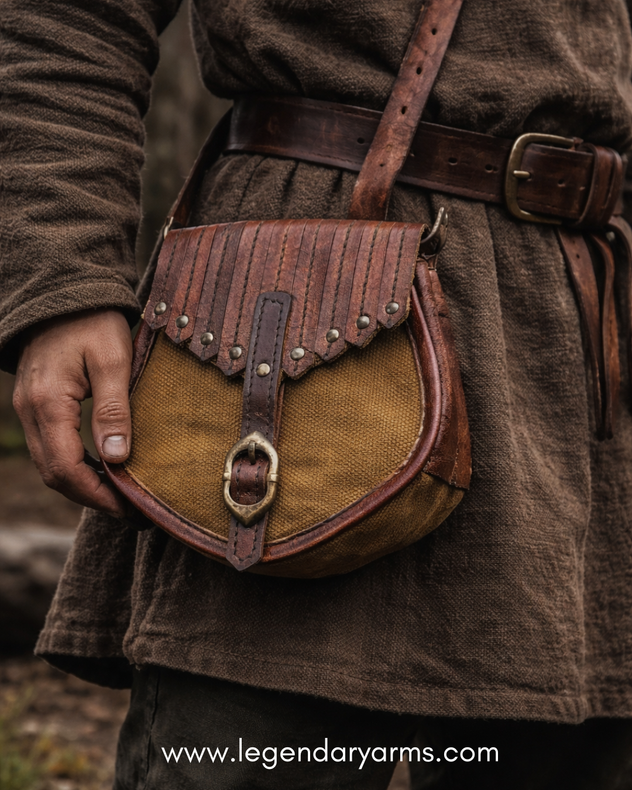
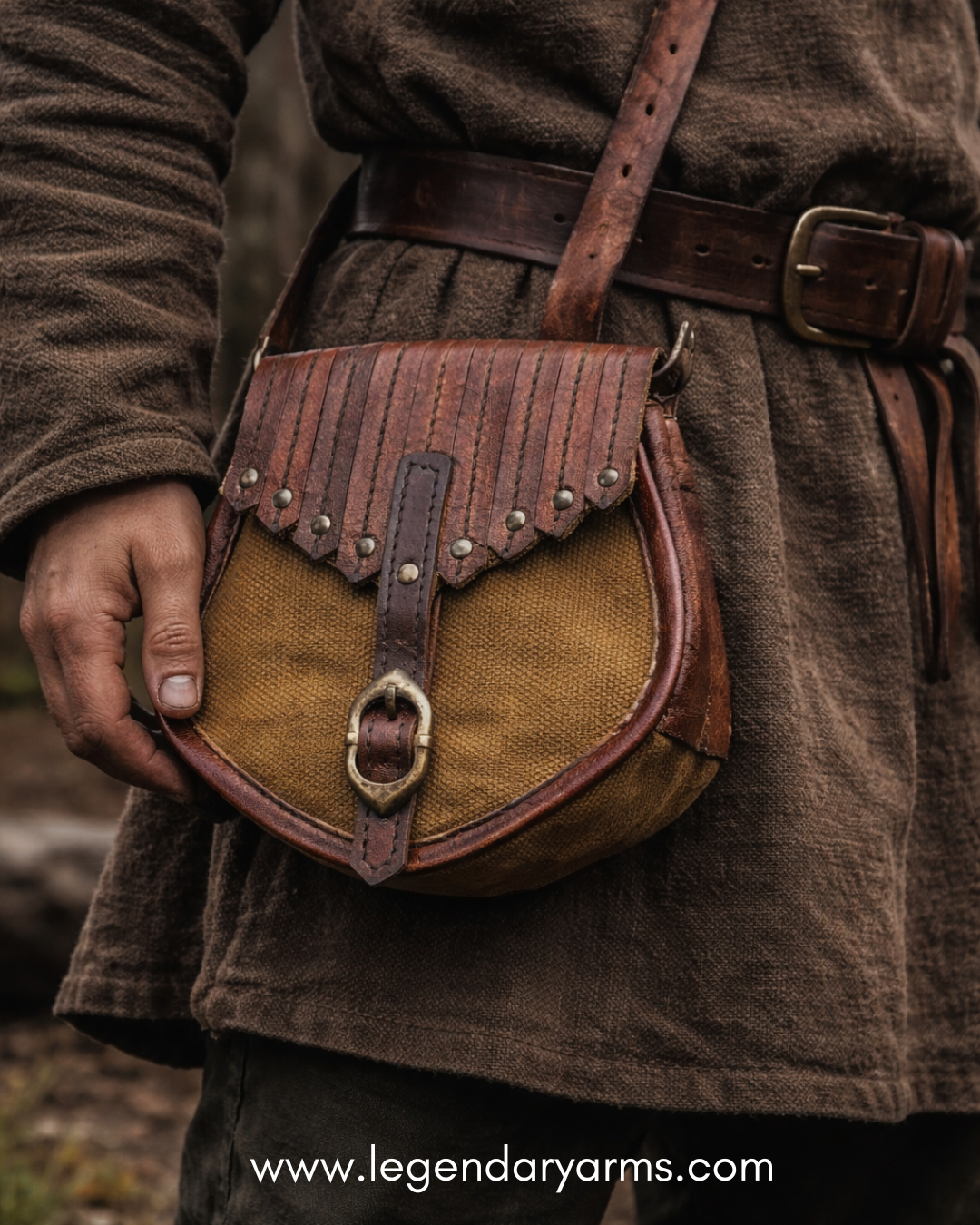
These early designs were simple — a pouch with a long strap worn across the chest or over one shoulder. They kept essential items close to the body, easy to access, and secure during movement. Over time, these evolved into what we now recognize as the leather bag crossbody style.
The design made so much practical sense that it never went away
What Adventurers Carried in Their Bags
The contents of a historical traveler's bag reveal a lot about what mattered most on the road.
Navigation Essentials
Maps, compasses, and journals were among the most valuable items any explorer carried. A detailed map was worth more than almost anything else. Journals doubled as both personal records and practical reference — explorers would note trail conditions, water sources, and distances to help others who followed.
Survival Supplies
Dried meat, hard bread, flint and steel for starting fires, and a small water vessel were standard. Every item had to earn its place. Space was limited, and unnecessary weight could slow you down or wear you out long before your destination.
Personal Belongings
Letters of introduction, currency, and official documents were carried close to the body, often in an inner compartment. These items determined whether a traveler could pass through checkpoints, trade in markets, or secure shelter for the night. Losing them wasn't just inconvenient — it could end a journey entirely.
Why the Vintage Bag Design Has Survived for Centuries
There's a reason the vintage bag aesthetic never really went out of style. These designs weren't created to look good — they were created to work. And things that genuinely work tend to last.
The simplicity is part of the appeal. A single main compartment, a secure closure, a sturdy strap. No unnecessary features, no complex systems. Just a well-made bag that does exactly what it's supposed to do.
Today, that same design philosophy draws people in. There's something honest about a vintage bag — it doesn't pretend to be more than it is. And in a world full of trend-chasing products, that kind of quiet confidence stands out.
From Historic Trails to Modern Travel
The needs of a modern traveler aren't as different from a 19th-century explorer as you might think. You still need to carry documents, money, a way to navigate, and a few personal essentials. You still want your hands free. You still want something durable that won't fall apart after a year of regular use.
That's exactly why the travel bag crossbody has made such a strong comeback. It fits into airports, city streets, and outdoor adventures equally well. It's the kind of bag that moves with you — practical, stylish, and built for real life.
The leather bag crossbody in particular hits a sweet spot between heritage design and modern function. It looks like it has a story. And chances are, after a few years of use, it will.
Lessons Modern Travelers Can Learn from Historical Adventurers
Old-school travelers didn't have the luxury of packing light as a trend. For them, it was a necessity. And there's a lot we can borrow from that mindset.
Carry only what you actually need. Historical adventurers didn't have room for "just in case" items. Every piece of gear was deliberate. That discipline leads to better packing and less strain on the road.
Prioritize durability over trends. A leather bag that lasts 20 years is a better investment than a cheaper bag replaced every two years. Quality pays off over time.
Choose gear designed for real use. The best historical gear was designed by people who actually used it. Look for the same today — bags made with intention, not just aesthetics.
Conclusion
Before backpacks existed, adventurers still found a way. They used what they had — mainly leather, creativity, and a clear sense of what mattered most. The leather bag became their answer to a real problem, and the designs they developed were so functional that we're still using variations of them today.
The influence of those early travel bags is still visible in every travel bag crossbody and leather satchel you see on the streets. At legendaryarms.com, that heritage is exactly what drives the design of our gear — built for people who move through the world with purpose, just like the adventurers who came before us.
Classic designs don't survive centuries by accident. They survive because they work.