
Essential Civil War Accessories for Reenactors and Collectors
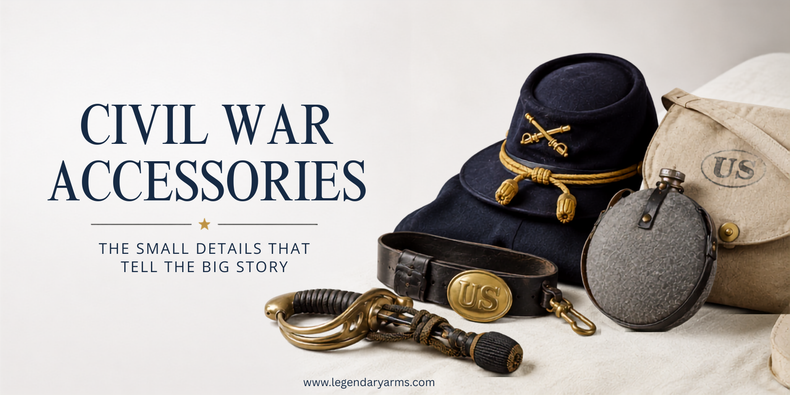
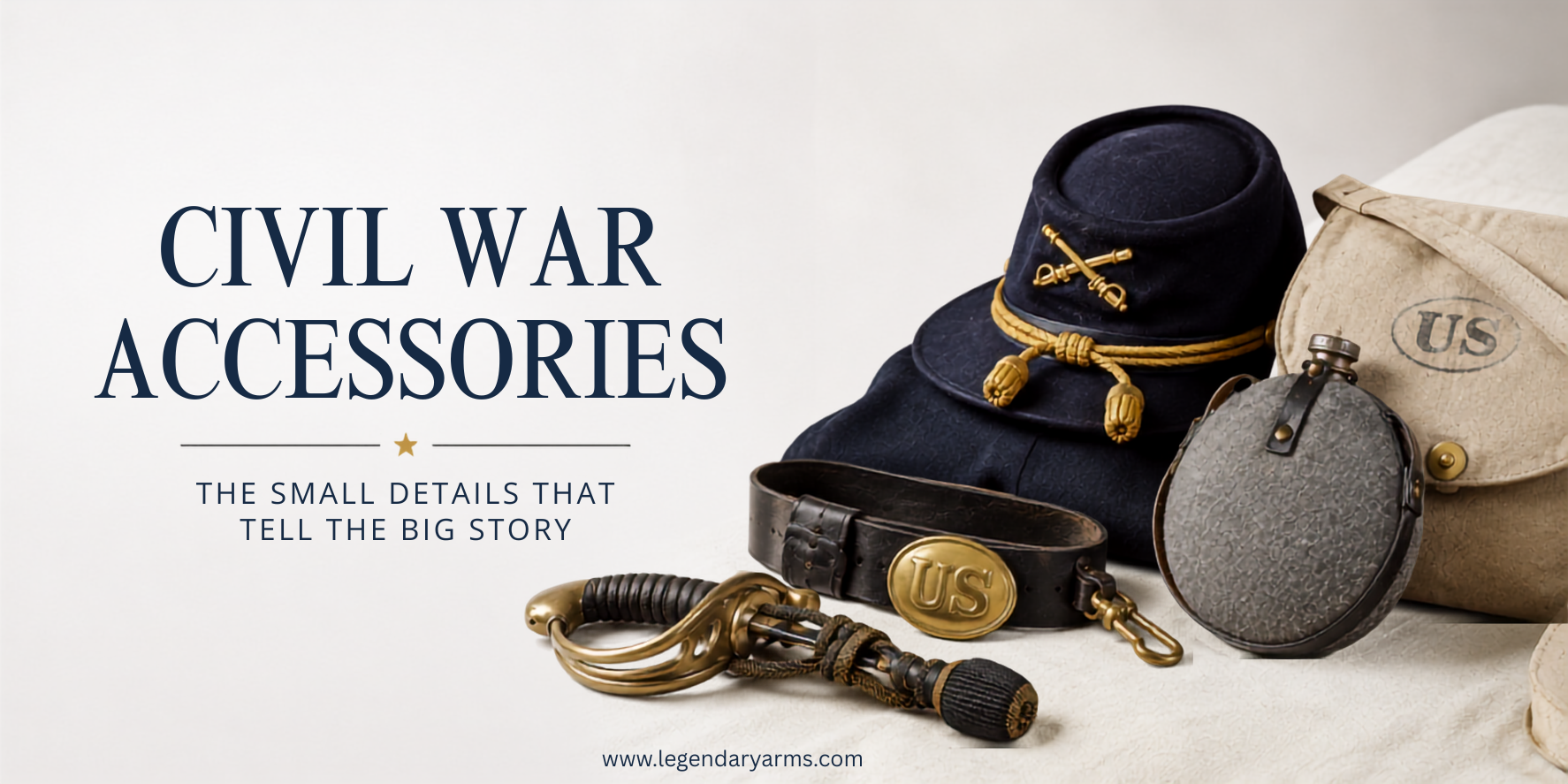
If you've ever stood next to a Civil War reenactor in full kit, you already know the jacket and trousers aren't what make people stop and stare. It's the small stuff. The hat cord. The way a sword knot loops around a hilt. The worn canvas of a haversack that actually looks like it's been on a march. Uniforms do the heavy lifting from ten feet away, but Civil War accessories are what hold up under close inspection — and they're usually what separates a weekend costume from a genuinely authentic impression.
Whether you're building your first reenactment kit or adding to a collection, here's a breakdown of the accessories that matter most, why they matter, and what to look for when you're buying.
Hat Cords and Insignia: The Fastest Way to Show Your Branch
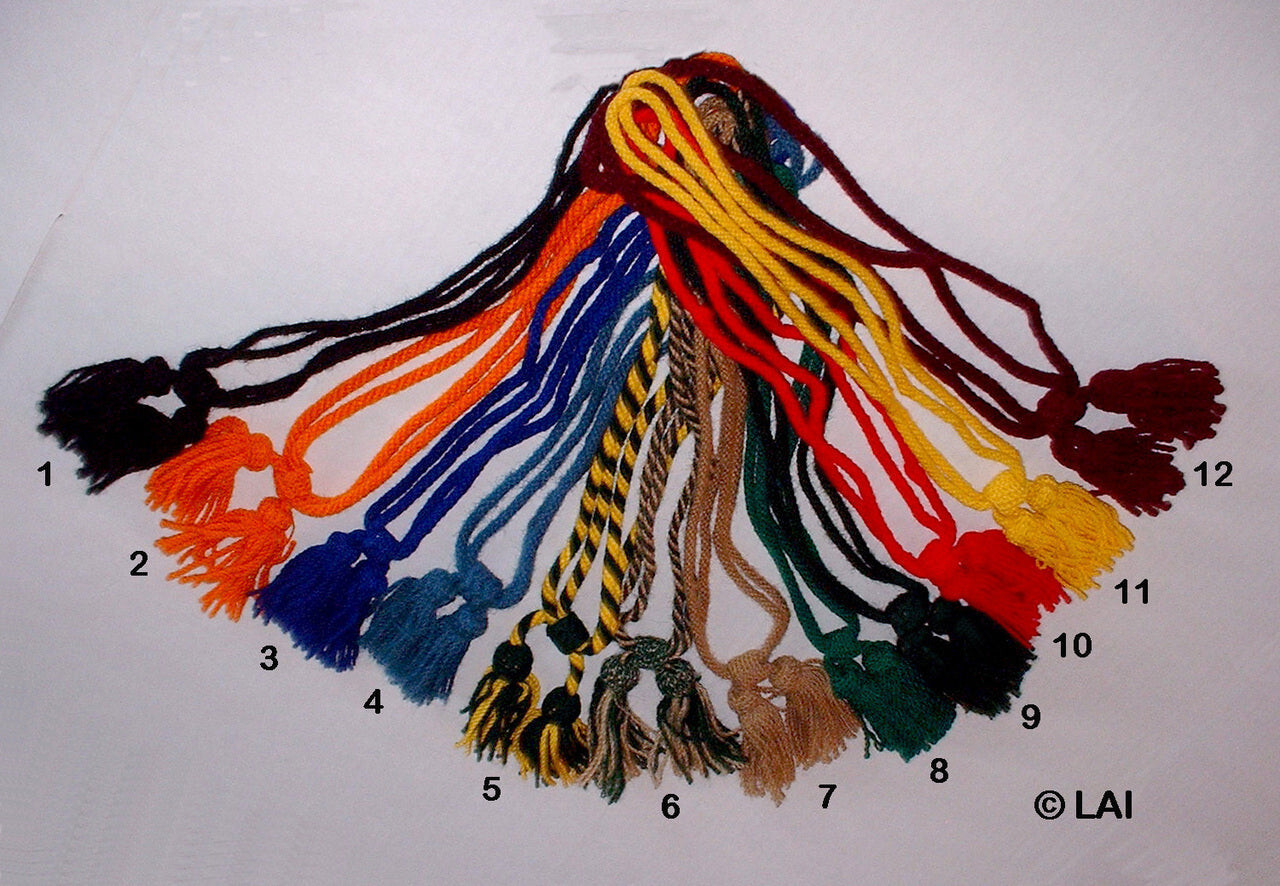
Before a soldier's rank or regiment meant anything, his hat cord told you his branch at a glance. These weren't decorative extras — they were a practical, color-coded system used across both Union and Confederate forces.
- Light blue cords marked infantry
- Red cords marked artillery
- Yellow cords marked cavalry
Cords were typically wool or silk, wrapped around the base of the crown and finished with acorn-shaped tassels. Pair that with a brass branch insignia — crossed sabers for cavalry, a bugle for infantry, crossed cannons for artillery — and you've got a hat that instantly reads as period-correct rather than generic.
For collectors, hat cords and insignia are also some of the most affordable entry points into Civil War militaria. They're small, they're collectible on their own, and originals (when you can verify provenance) hold value well. For reenactors, this is one accessory where cutting corners shows immediately, since it sits right at eye level.
Sword Knots and Frogs: Small Leather, Big Function
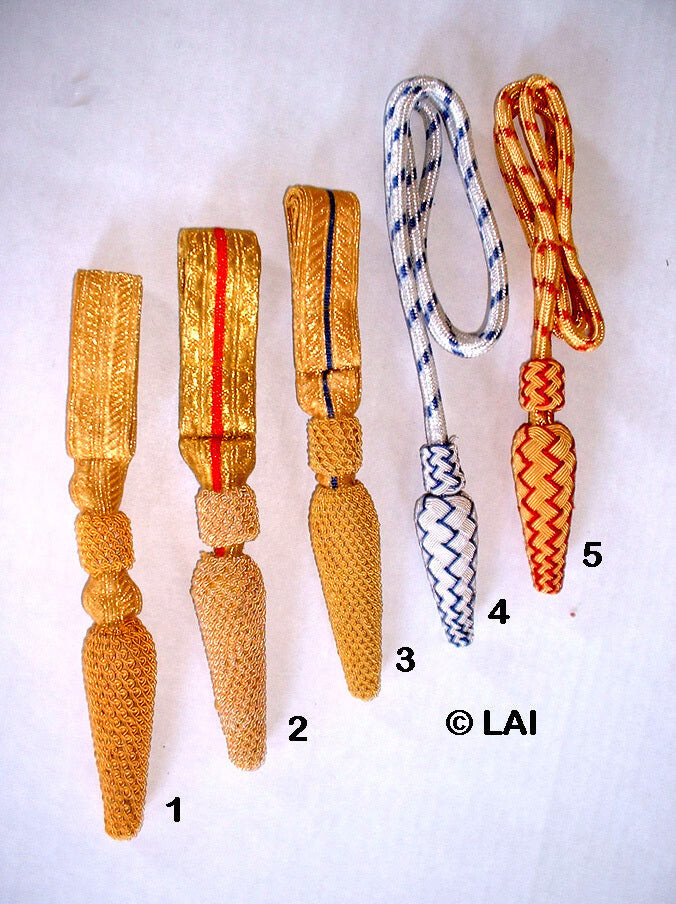
Officers carrying a saber needed more than just the weapon — they needed a way to keep from losing it in the middle of a fight. That's where the sword knot comes in: a leather or woven cord strap that wraps around the hilt and wrist, so a dropped or knocked-loose sword doesn't end up on the ground.
Just as important, and often overlooked, is the frog (sometimes spelled "throg" in period slang, though "frog" is the correct historical term). This is the leather loop or belt attachment that secures the scabbard to the waist belt at the correct angle — not too vertical, not swinging loose, but positioned so the officer could draw quickly and move naturally.
When shopping for these pieces, look for:
- Full-grain leather construction, not bonded or synthetic leather
- Hand-stitched or period-accurate machine stitching
- Correct hardware finish (brass or blackened steel, depending on rank and branch)
- A frog angle that matches historical photographs, not a modern costume interpretation
A cheap sword knot or an ill-fitting frog is one of those details that reenacting judges and serious collectors notice instantly, even if a casual observer wouldn't.
Haversacks and Canteens: Built for the Field, Not the Display Case
No Civil War impression is complete without field gear, and nothing says "lived-in soldier" like a proper haversack and canteen combination.
The haversack was a soldier's mobile pantry — a tarred (or painted) canvas bag slung over the shoulder that carried rations, utensils, and personal effects. The tarring wasn't for looks; it kept moisture out and rations dry over long marches. A quality reproduction haversack should have accurate stitch counts, a properly weighted canvas, and the correct closure style for your impression's year and army.
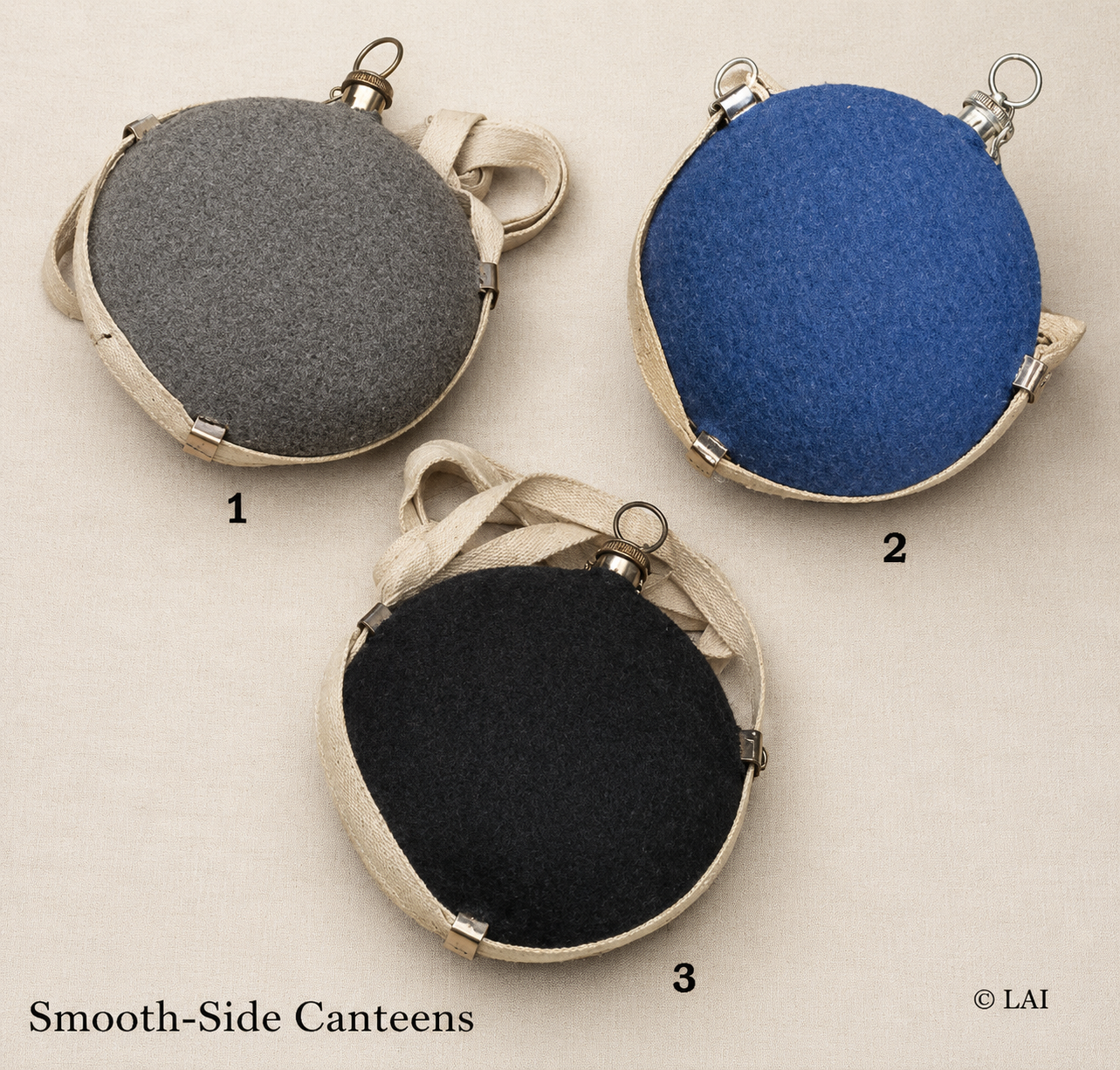
The canteen is just as telling. Union and Confederate soldiers both used wool-covered tin canteens, and the wool cover served a real purpose: it helped keep water cooler in the summer heat through evaporation. Look for:
- Correct canteen shape (smooth-side vs. bullseye, depending on era and side)
- Accurate wool covering, not a synthetic substitute
- Period-correct hardware, including tin or pewter buckles and the right style of strap
These two pieces get more physical use than almost anything else in a kit, so durability matters as much as accuracy. A well-made haversack and canteen combo will actually survive a weekend event, not just a photo.
Why These Accessories Matter More Than People Think
It's tempting to spend your whole budget on the jacket, trousers, and firearm, and treat accessories as an afterthought. But close-up authenticity — the kind that impresses fellow reenactors, wins points at events, and holds up in photographs — comes almost entirely from these smaller pieces. A perfect uniform with a synthetic canteen strap or a plastic-buckle haversack breaks the illusion fast.
For collectors, these accessories also tend to be more accessible entry points than firearms or uniforms, both in price and in the ability to verify authenticity. A well-documented hat cord, insignia, or sword knot can be a smart addition to a collection without the five-figure price tag some Civil War artifacts carry.
Quick Answers: Common Questions About Civil War Accessories
What color hat cord means infantry? Light blue is the standard Civil War hat cord color for infantry, with red for artillery and yellow for cavalry.
What is a sword frog used for? A sword frog is the leather attachment that connects a scabbard to a waist belt, holding the sword at the correct angle for the wearer to draw it.
Why were haversacks tarred? Tarring made the canvas water-resistant, protecting a soldier's rations and personal items from moisture during marches and camp life.
Why did canteens have wool covers? The wool covering helped keep water cooler through evaporation and cushioned the tin canteen against dents and damage.
Building a Kit That Holds Up to Scrutiny
Whether you're outfitting yourself for your first event or refining a collection you've been building for years, these accessories are worth the extra research and the slightly higher price tag for quality reproductions or verified originals. They're what turn a good-looking uniform into a genuinely convincing impression — and they're often the pieces people remember long after the parade or battle reenactment ends.