
Famous Civil War Cavalry Commanders Who Dominated the Battlefield
When it comes to the Civil War and its military figures, it is inevitable that everyone would remember one thing – the prominent roles occupied by the prominent generals. Grant, Lee, Sherman. Names which appear on statues, in history books, and monuments around the whole nation.
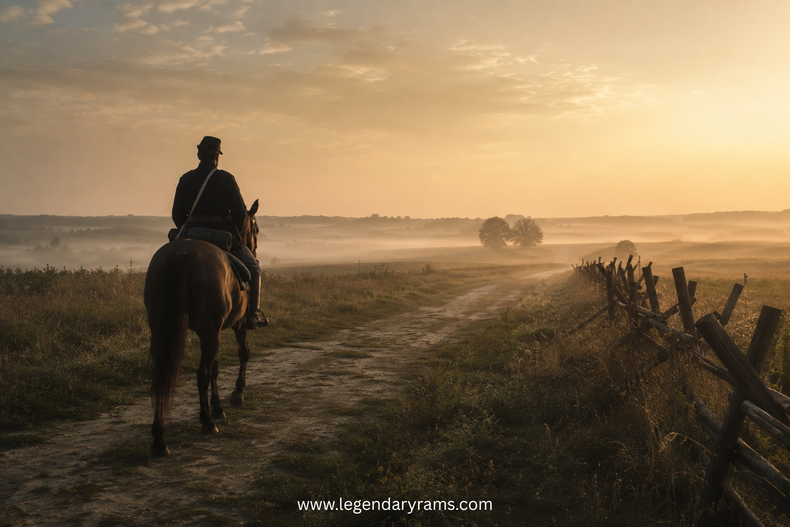
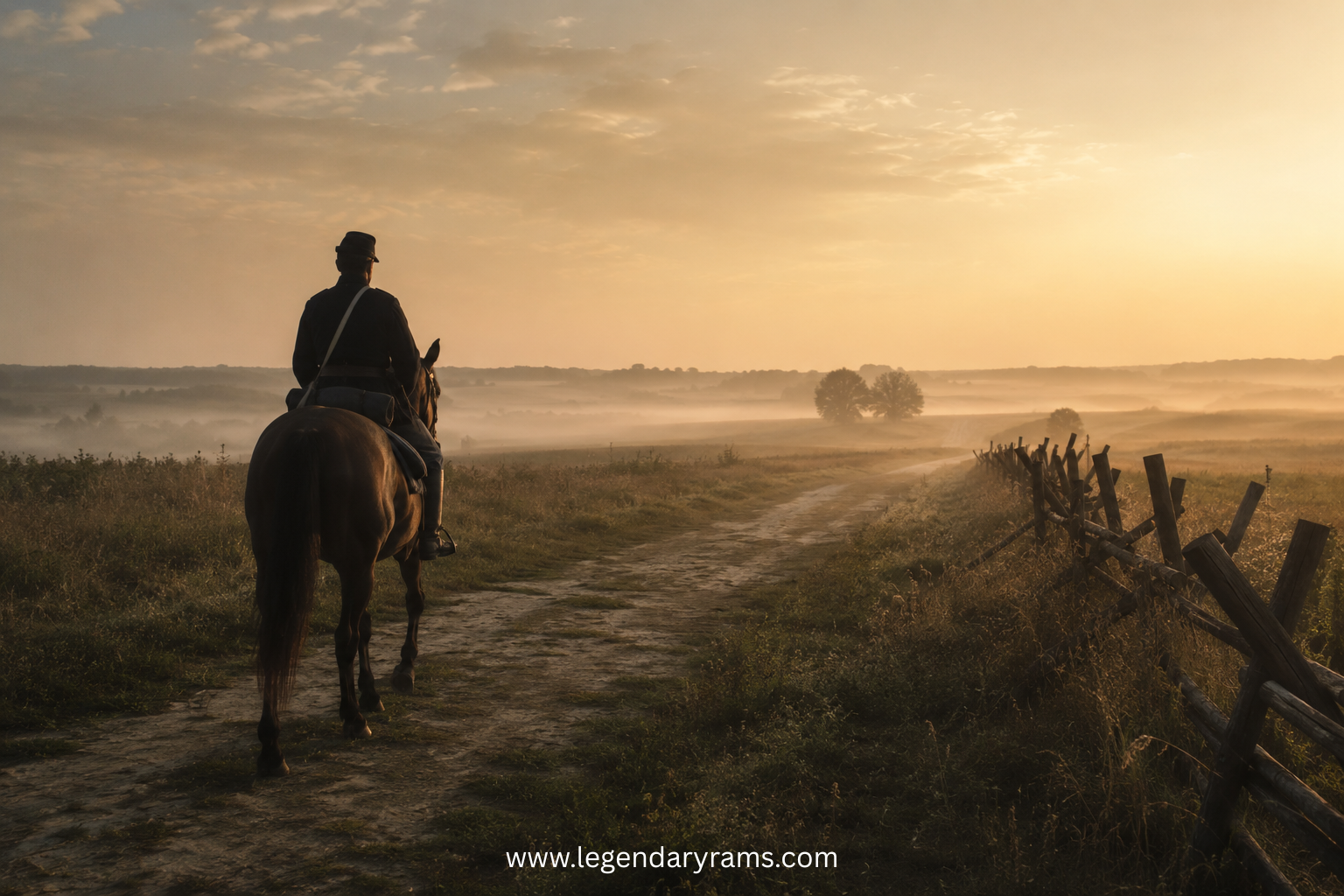
What few people tend to forget is that when the commanders were drawing up battle plans in their tents, cavalry officers were riding fast in the mud and fog in order to keep the armies alive and well-fed. Cutting down supplies, scoping ahead, providing a crucial surprise at the right moments – all of that was the job of these riders.
And while many of them certainly performed admirably in their positions, some of them were simply exceptional
J.E.B. Stuart — The Eyes of Robert E. Lee
A man who seemed as if his life could not be anything but the imagination of a novelist seeking to create a character with the power to mesmerize all those reading his book was James Ewell Brown Stuart. The reason for this was because of the way he wore an expensive hat and grey coat, rode elegantly atop his beautiful horse, and confidently roamed about knowing victory in any fight. The interesting part was that he was often correct.
He was supposed to be the intelligence section of the Army of Northern Virginia of General Robert E. Lee, and in that position, he was perfect. In a war fought without wireless communication or aerial observation, that ability was worth more than a division of infantry.
His most celebrated achievement — riding completely around the Union Army of the Potomac, not once but twice — was the kind of thing that should not have been possible. To encircle an entire enemy army, gather intelligence from every angle, and return home without catastrophic loss required a combination of boldness and precise execution that few commanders in any era have managed. The Union high command was left simultaneously furious and embarrassed.
Yet Stuart was far more than a showman. He was tactically sharp, deeply committed to his men, and absolutely essential to Lee’s ability to operate effectively. When Stuart was killed at Yellow Tavern in May 1864, Lee lost something he could never fully replace. For the rest of the war, the Confederate cavalry in the East never quite moved with the same confidence again.
Philip Sheridan — The Man Who Turned Cavalry Into a Weapon
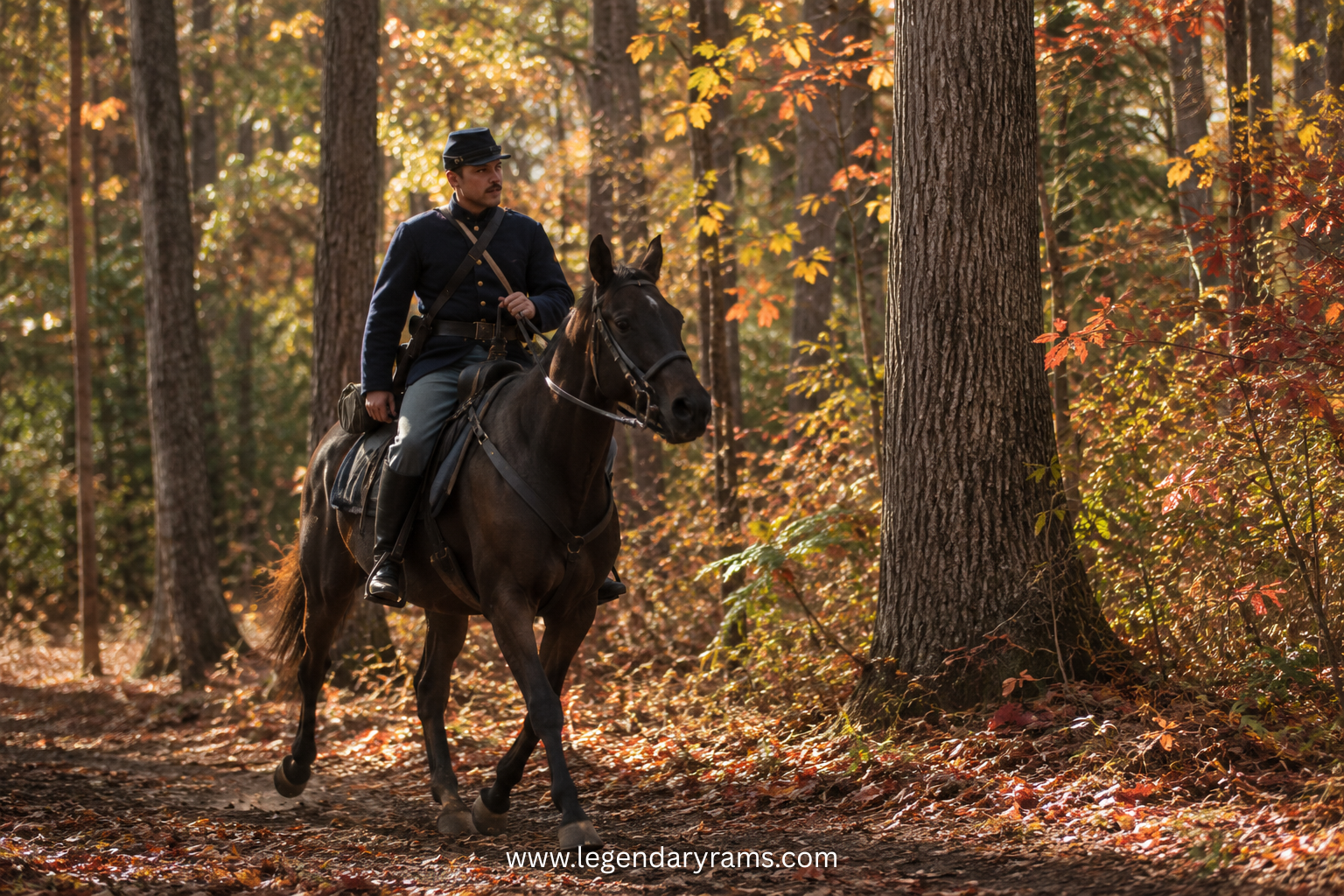
Philip Sheridan did not look the part. He was short, stocky, and had a manner that struck some people as unnecessarily blunt. Early in the war, senior officers looked at him and saw someone ordinary. That assessment would cost the Confederacy dearly.
When Ulysses Grant gave Sheridan command of the Union Cavalry Corps in 1864, something fundamental changed in how the North used its mounted forces. Before Sheridan, Union cavalry had largely been employed in a supporting role — guarding flanks, carrying messages, staying out of the way of the real fighting. Sheridan found this arrangement intolerable. He believed cavalry, properly led, could win battles on its own. He set about proving it.
The Shenandoah Valley Campaign of autumn 1864 was his masterwork. Ordered to neutralize the valley as a Confederate resource, Sheridan did not simply occupy territory. He systematically dismantled it, targeting the farms, mills, and barns that fed Lee’s army. It was a hard, deliberate kind of warfare, and it worked with brutal efficiency. The valley that had once been called the breadbasket of the Confederacy was left barren.
The final act came in April 1865, when Sheridan’s cavalry raced ahead of the retreating Confederate army and blocked the road to Appomattox. Lee had nowhere left to go. In a very direct sense, it was Sheridan who ended the war — and he did it on horseback, moving faster than anyone thought possible.
Nathan Bedford Forrest — War by Pure Instinct
There has never been a military career quite like Nathan Bedford Forrest’s. He entered the war with no military training whatsoever, having spent his life as a businessman rather than a soldier. He enlisted as a private. By the end of the war, he was a lieutenant general and one of the most feared cavalry commanders in American history. The distance between those two points is almost impossible to explain by any conventional measure of military talent.
Forrest operated entirely on instinct, and his instincts were extraordinary. He understood the rhythm of battle in an almost physical way — when to press, when to hold, when an enemy was about to break and how hard to push before they did. His famous maxim, “Get there first with the most men,” sounds deceptively simple. In his hands, it was a complete philosophy of war.
What made him particularly dangerous was his speed. Forrest moved his forces at a pace that enemy commanders repeatedly failed to anticipate. He struck supply lines, disrupted communications, and forced entire Union armies to divert resources toward containing him rather than fighting the larger war. At the Battle of Brice’s Cross Roads, he defeated a Union force more than twice the size of his own, a victory so decisive it remains a case study in cavalry tactics to this day.
William Sherman, who was not given to generous assessments of his opponents, said Forrest was the most remarkable military man the conflict had produced. Coming from Sherman, that was not flattery. It was a frank acknowledgment of someone who had consistently outthought and outfought everything thrown at him.
George Armstrong Custer — Reckless, Brilliant, and Born for the Charge
George Armstrong Custer has not always had a good reputation in history. It is easy to overlook the man himself in the wake of his downfall at the Little Bighorn. In the Civil War era, Custer was not an example of failure. He was something close to extraordinary.
He was twenty-three years old when he received his general’s stars — one of the youngest men to hold that rank in American military history. His uniform was custom-made, his golden hair was famously long, and he led charges at the front of his men rather than directing them from a safe distance. His soldiers called him the Boy General, a nickname that carried both admiration and a certain exasperated affection.
His finest moment came at Gettysburg, in a fight that most accounts of that battle never mention. While Pickett’s Charge was unfolding on the western side of the battlefield, J.E.B. Stuart was quietly leading a large Confederate cavalry force around the Union flank, intending to strike the rear of the Union lines at the exact moment Pickett hit the front. It was a sophisticated, potentially devastating plan. Custer met Stuart east of the main battlefield and stopped him completely, leading repeated charges that broke the Confederate momentum and ended the threat. The Union victory at Gettysburg owes more to Custer than most people realize.
His aggression would eventually betray him in later years. But in the context of the Civil War, that same reckless energy made him one of the most effective cavalry officers either side produced.
Wade Hampton — Quiet Greatness in the Shadow of Defeat
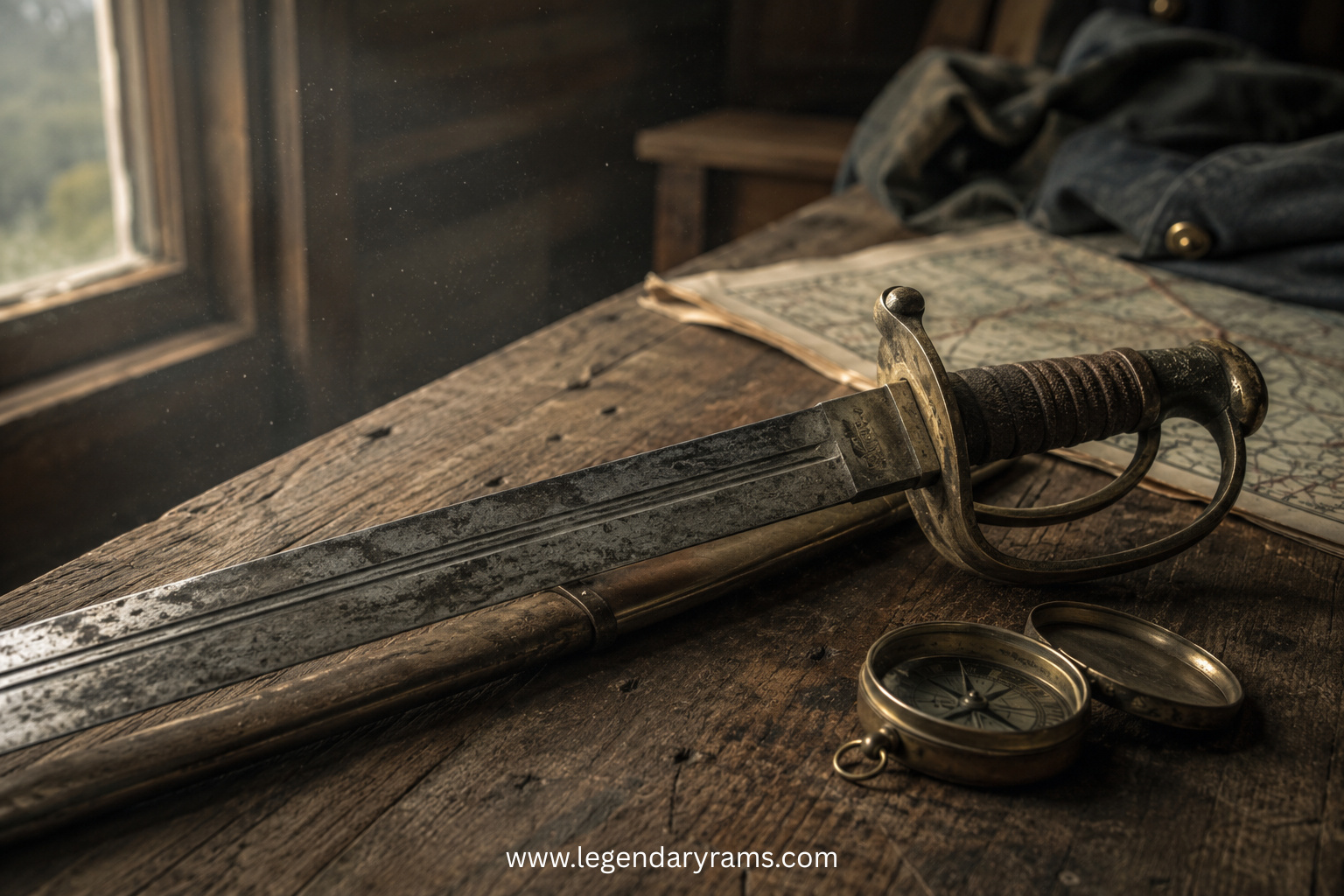
Wade Hampton stepped into one of the most thankless roles the Civil War offered — replacing a legend under desperate circumstances, with dwindling resources, against an increasingly dominant opponent. He did it with a quiet authority that earned him the deep loyalty of every man he led.
Hampton was not a career soldier. Before the war he had been a wealthy planter, educated and cultured, with no formal military background. What he brought to the saddle instead was something harder to teach: steadiness, intelligence, and an absolute refusal to be rattled regardless of what was happening around him. He was wounded multiple times in combat and returned to his command each time. His men noticed. It matters enormously, when things are going badly, to serve under someone who simply keeps going.
By 1864, when Hampton took full command of the Confederate cavalry in the Eastern Theater, the war was moving decisively against the South. Sheridan’s forces were better supplied, better mounted, and numerically superior. Hampton competed with them anyway, often brilliantly. His most celebrated operation — the Beefsteak Raid of September 1864, in which Confederate troopers captured nearly 2,500 head of Union cattle and drove them back to feed Lee’s hungry army — was a stroke of improvised genius at a moment when the Confederacy could not afford to be anything less.
Hampton could not change the outcome of the war. Nobody could by that point. But he conducted himself with a dignity and competence that set him apart even in a conflict full of talented commanders.
What They Left Behind
These five men lived in different worlds and fought under very different circumstances, but they shared something important. Each of them, when the moment demanded it, found a way to be better than the situation called for. Stuart gave Lee a fighting chance when the odds were stacked against him. Sheridan gave Grant a decisive edge at the exact moment it was needed. Forrest made an entire theater of war uncomfortable with nothing but instinct and speed. Custer saved a position that might have unraveled everything at Gettysburg. Hampton held together what remained of Confederate cavalry pride when almost everything else had already slipped away.
The Civil War cavalry was never just about horses and sabers. It was about men who understood that wars are won in the spaces between the big battles—in the raid at midnight, the road cut before dawn, the charge nobody saw coming. These commanders understood that better than almost anyone. And more than a century and a half later, their stories still have the power to remind us what genuine leadership under pressure actually looks like.