
Inside the Steel: Untold Stories of Civil War Swords That Shaped American History
When Steel Carried Stories No Book Could Tell
When we think about civil war history, images of smoke-filled battlefields, roaring cannons, and long rifles often come to mind. The thunder of artillery and the chaos of advancing lines tend to dominate our imagination. But beyond the noise and confusion, there was something quieter—more personal—resting in the hands of soldiers and officers alike.
The civil war sword.
It wasn’t just a weapon. It was a symbol of command, a tool of survival, and, in many ways, a reflection of the man who carried it. Unlike firearms, which could be issued and replaced with relative uniformity, a sword often felt individual—balanced to the hand, worn with familiarity, and carried with intent. Every blade had a story—some marked by bravery, others by desperation, and many shaped by moments history never recorded.
Some swords witnessed decisive charges. Others were present in quiet acts of leadership, raised not in violence but in direction. And many more remained silent companions, carried through marches, skirmishes, and long stretches of uncertainty.
More Than a Weapon: The Role of Swords in War
Although firearms dominated the battlefield, the importance of the sword never truly faded. In fact, the American Civil War weapon landscape still made room for steel in ways that might surprise you.
Swords served purposes that guns simply couldn’t replace. Officers used them to signal commands during battle, guiding troops through confusion and chaos where verbal orders could be lost in noise. A raised blade could direct movement, mark formation shifts, or signal a charge at precisely the right moment.
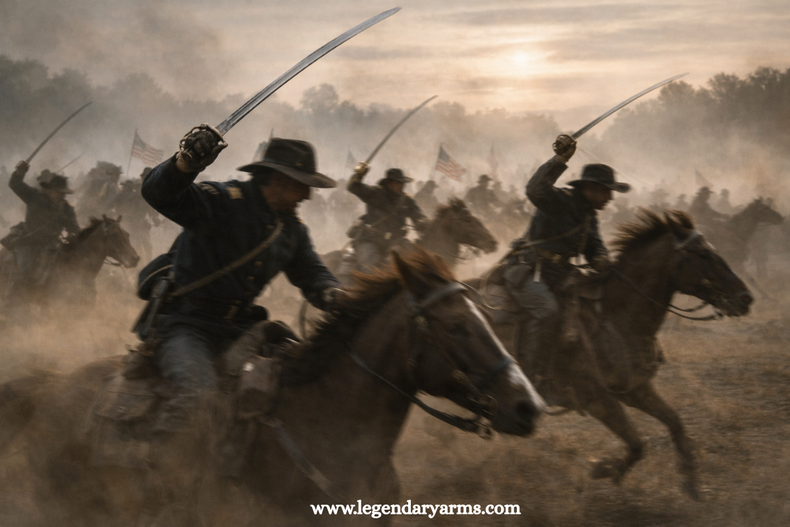
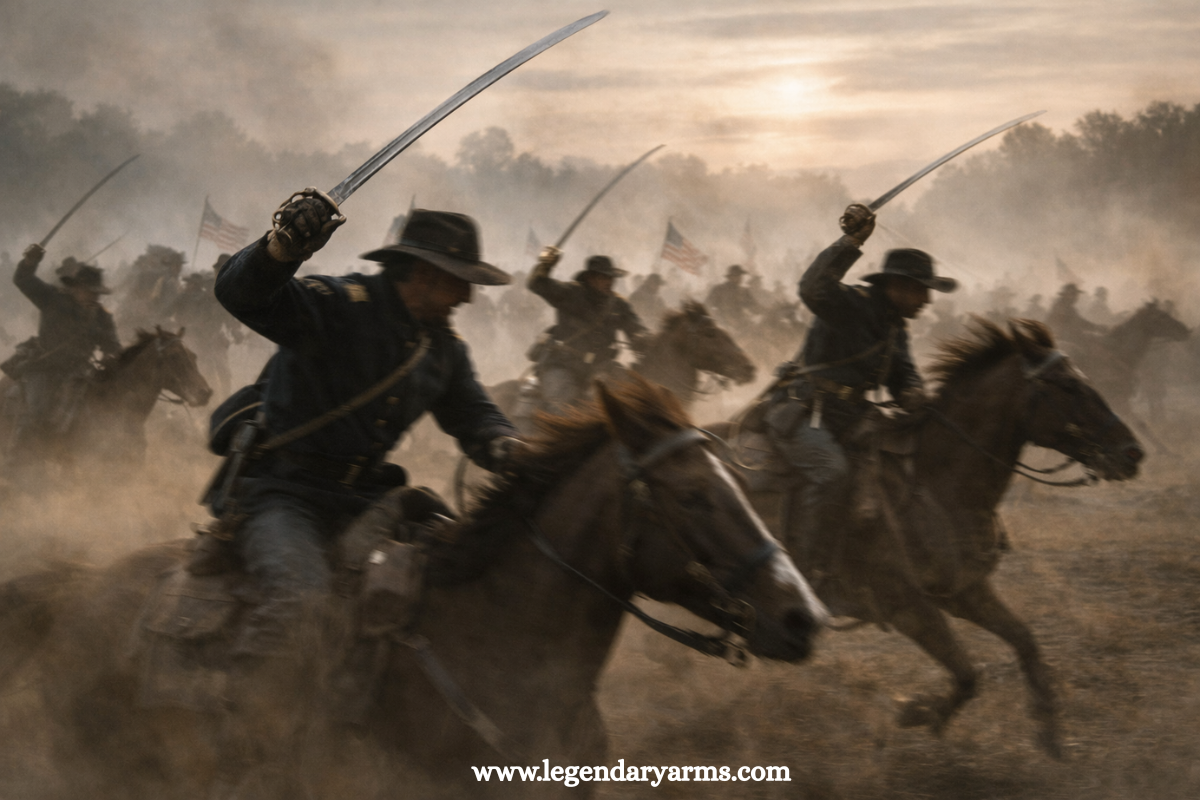
Cavalry units relied on swords in fast-moving, close-range encounters where there was no time to reload or reposition. In those fleeting seconds, steel was faster than powder. The outcome of a clash could hinge on reach, timing, and instinct.
And perhaps most importantly, a sword carried presence. It inspired confidence among troops and reinforced authority. The mere sight of an officer holding a saber upright could steady wavering lines. In some moments, it even instilled fear in the opposing side.
In a war driven by technological change and industrial production, the sword remained timeless—bridging older traditions of warfare with the realities of a modernizing battlefield.
Blades of Meaning: Stories Behind Civil War Swords
Not all swords were created equal. Some were elegant, almost ceremonial, crafted with care and meant to reflect rank and refinement. Others were raw, heavy, and built for survival, showing little concern for ornament and every concern for function.
The Officer’s Saber: Leadership in Steel
The officer’s saber was never just about combat. It was about identity.
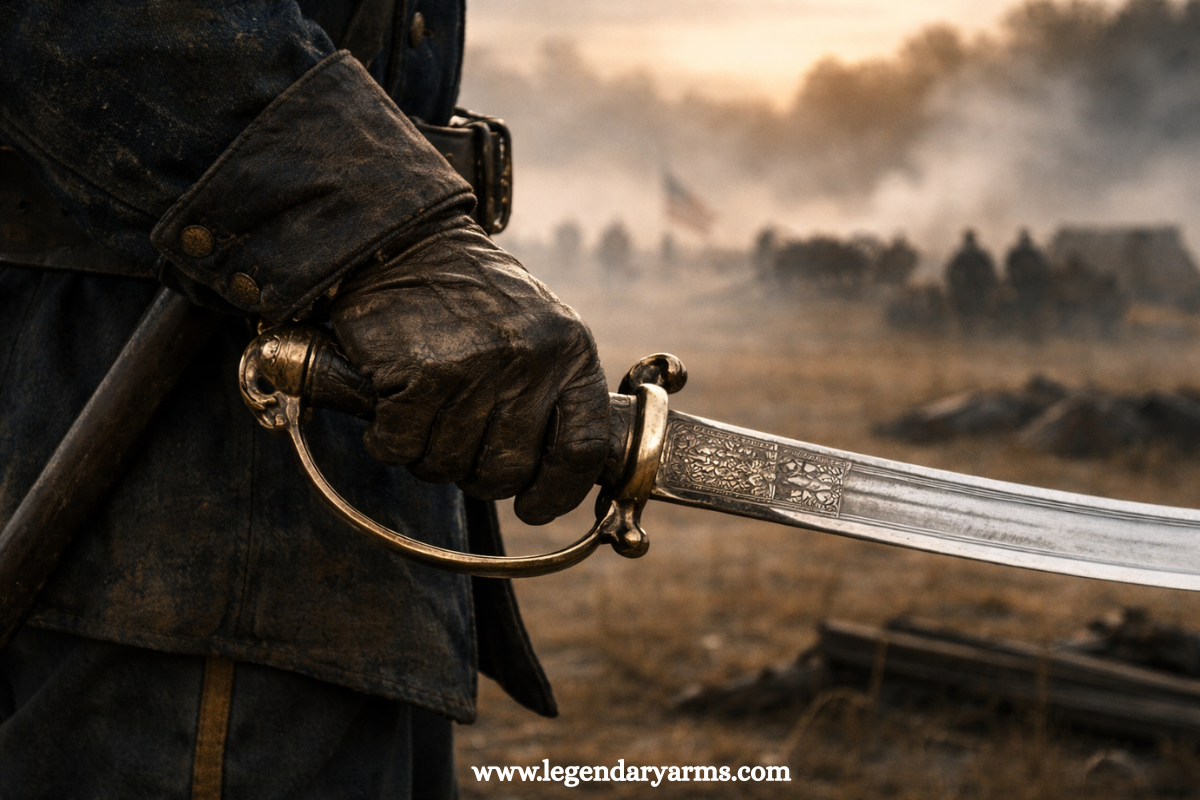
Polished, balanced, and often engraved with intricate designs, these swords symbolized leadership and duty. They were carried not just into battle, but into responsibility. An officer didn’t simply wield a saber—they embodied what it represented.
A single raised blade could signal an advance, steady a retreat, or rally men when morale began to fade. In the absence of modern communication, that gesture carried weight. It could change direction, restore order, or inspire courage in uncertain moments.
Over time, many of these sabers became deeply personal artifacts. Some bore inscriptions, others showed wear patterns unique to their owners. In many ways, the saber spoke louder than words ever could—it was a visible extension of authority and resolve.
The Cavalry Saber: Speed, Power, and Survival
If the officer’s saber represented control, the cavalry saber embodied motion and intensity.
Designed for mounted combat, these swords were heavier, slightly curved, and optimized for slashing. Their design reflected the reality of combat on horseback—where speed and impact mattered more than precision alone.
Imagine charging across open terrain, the ground shaking beneath galloping hooves, visibility reduced by dust and smoke, and relying on nothing but your grip, your training, and your instincts.
In these moments, the civil war sword became more than symbolic—it became essential. It was not about ceremony, but about survival.
The Quiet Companions: Daggers in the Shadows
While swords carried prestige and visibility, smaller blades often carried survival in its most immediate form.
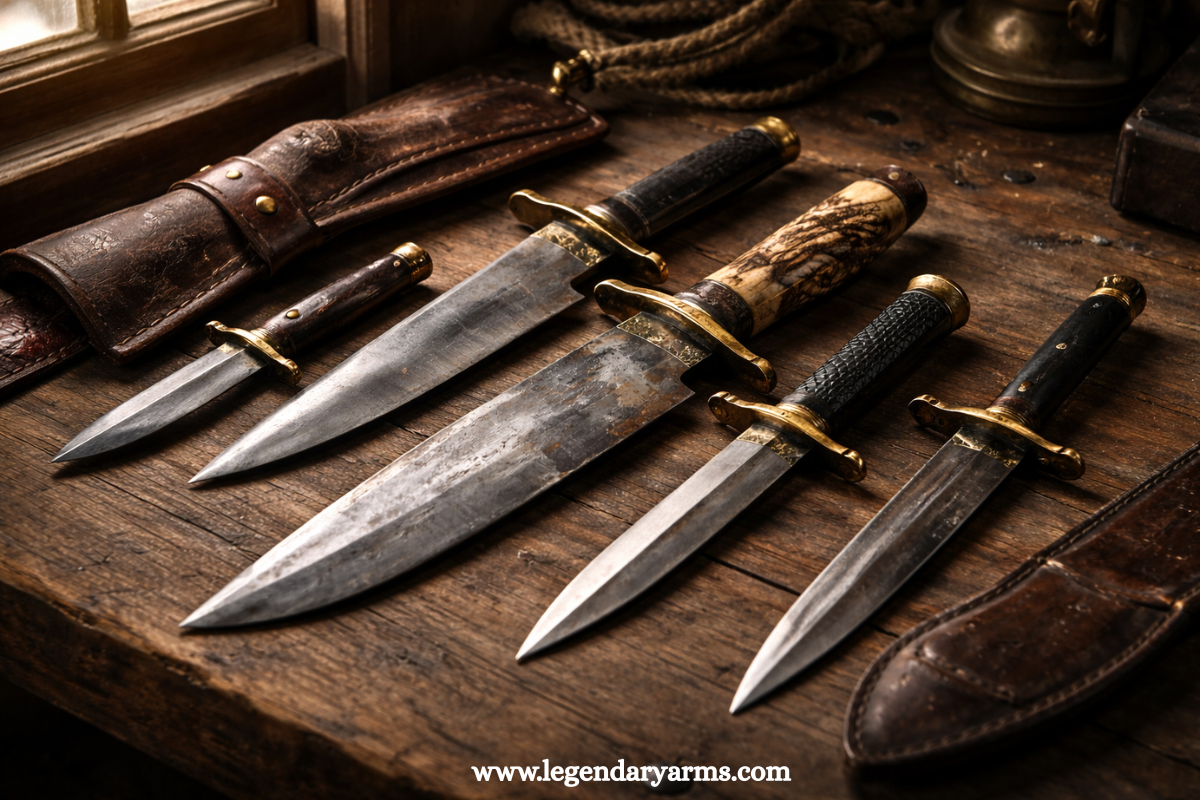
Daggers don’t always receive the attention they deserve in discussions of U.S. Civil War weapons, yet they played a deeply personal role in a soldier’s life. Compact, easily concealed, and always within reach, they offered a level of readiness that larger weapons could not.
These were not weapons of ceremony. They were weapons of necessity—used in moments where distance disappeared and decisions had to be made instantly.
For many soldiers, a dagger was more than a backup—it was reassurance. Something reliable. Something constant.
A Closer Look at Civil War-Inspired Daggers
Today, the legacy of these blades continues through carefully crafted reproductions and collector pieces that echo the spirit of that era.
Bowie-style blades, for example, remain iconic—bold in shape, rugged in appearance, and deeply tied to frontier culture. Compact combat daggers, on the other hand, reflect practicality and efficiency, designed with purpose rather than ornament.
What makes these pieces compelling isn’t just their design—it’s the connection they create. Holding one can feel like holding a fragment of history, shaped by the same principles of resilience, readiness, and human effort that defined the Civil War.
Forged by Hand: The Craft Behind the Steel
One of the most captivating aspects of any civil war sword is how it was made.
These weren’t mass-produced in the modern sense of uniform, automated output. Each weapon carried the marks of human effort—heated in fire, hammered into shape, refined through repetition, and sharpened with precision.
Blacksmiths and craftsmen played a critical role in this process. Their skill determined not just the appearance of the blade, but its strength, balance, and reliability. A well-crafted sword could mean the difference between effectiveness and failure in critical moments.
From the curvature of the blade to the texture of the grip, every detail mattered. Even subtle variations could affect how the sword felt in motion.
This craftsmanship is part of what makes American Civil War weapons so enduring. They weren’t just functional tools—they were expressions of human skill and intention.
Why These Weapons Still Capture Our Imagination
Even today, interest in Civil War history continues to grow—and so does the fascination with its weapons.
Part of this fascination comes from how tangible these objects feel. A sword isn’t just something you read about—it’s something that existed in someone’s hand, at a specific moment, under real pressure.
It connects the present to the past in a direct and almost immediate way.
Collectors, historians, and enthusiasts are drawn to that authenticity. Whether it’s an original artifact with visible wear or a carefully made modern piece, the sense of connection remains powerful.
These weapons offer more than visual interest—they offer perspective. They remind us of the individuals who carried them and the circumstances they faced.
More Than Steel, More Than History
At first glance, a civil war sword might seem like just another relic of the past. Something distant. Something preserved behind glass.
But look a little closer, and it becomes something more.
It becomes a story.
A story of leadership, conflict, survival, and identity. A story shaped not only by grand battles, but by individual moments—decisions made quickly, actions taken under pressure, and lives lived in uncertain times.
These stories were not always written down. Many were never recorded at all. But they remain, carried quietly through time in the steel itself.
And perhaps that’s why these weapons still matter today. Because they remind us that history wasn’t just observed—it was experienced. It was held, carried, and sometimes fought for, one blade at a time.