
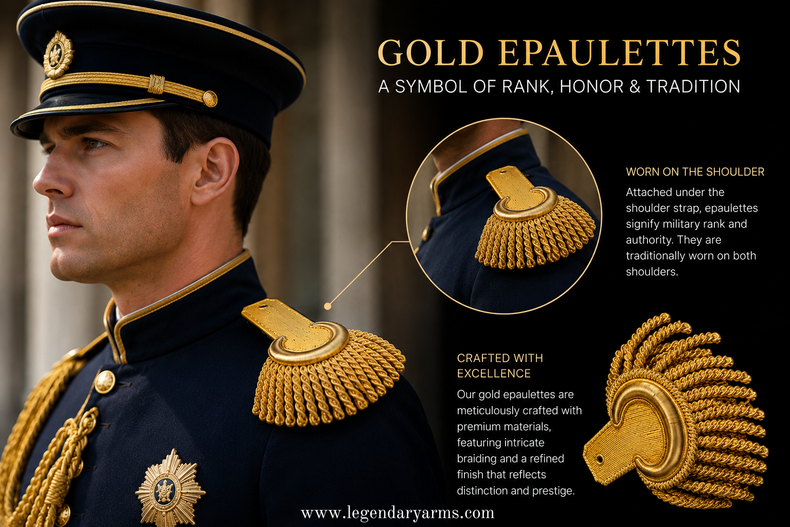
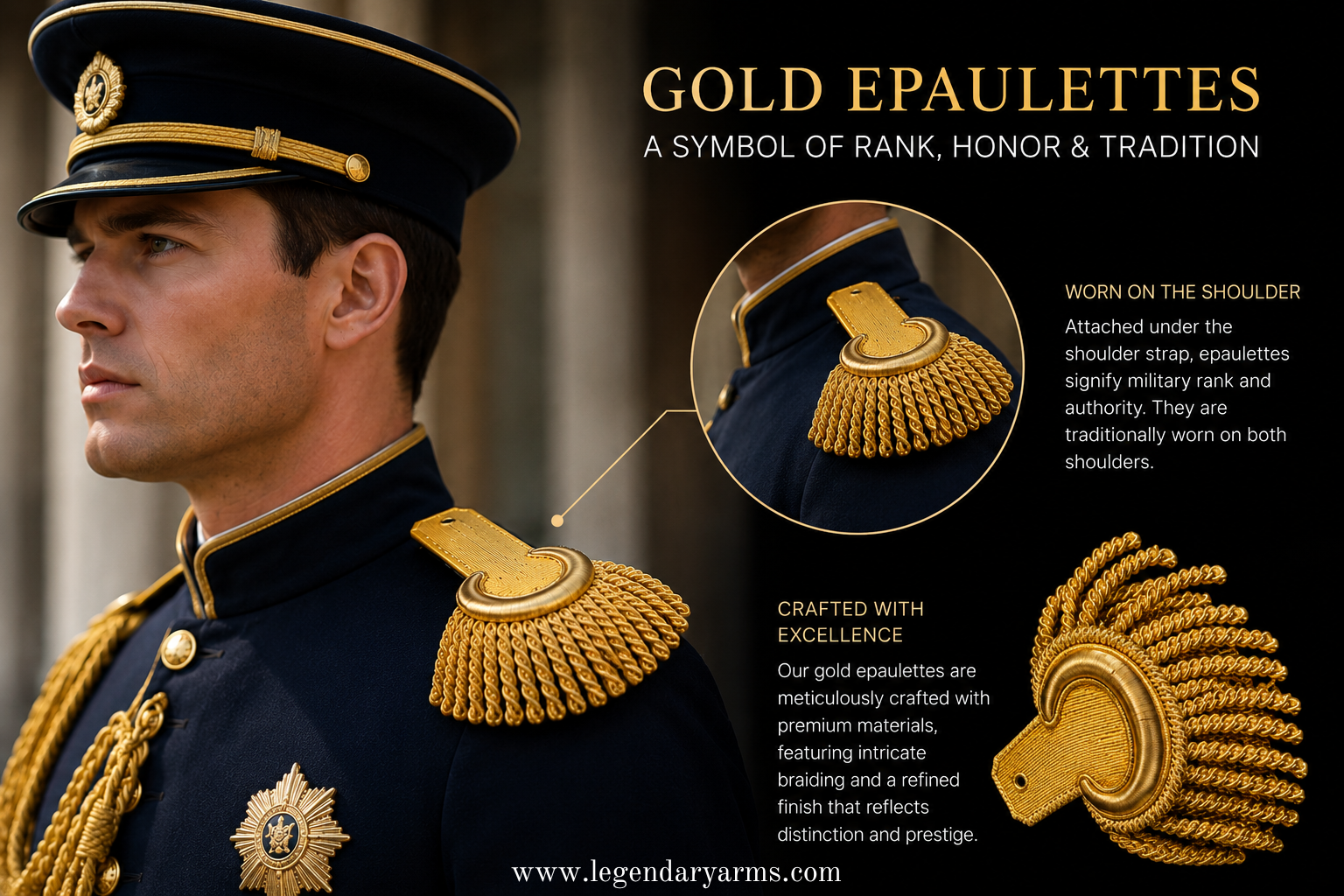
The History of Civil War Epaulettes: Rank, Symbolism and Military Tradition
Civil War military uniforms carried more than fabric and buttons. Every stitch, insignia, and accessory told a story about rank, loyalty, and duty. Among these details, epaulettes stood out as one of the most recognizable pieces of a soldier's dress uniform. Worn on the shoulders, these ornamental yet functional pieces marked an officer's status at a glance, something that mattered enormously in an era before radios or digital communication. On a chaotic battlefield or in a formal review, epaulettes helped soldiers identify who was giving orders. Today, collectors and historians still search for well-made civil war epaulettes to preserve this piece of American history, and pieces like our Civil War Epaulettes – Gold continue that tradition with the same attention to detail soldiers once relied on.
What Are Civil War Epaulettes?
Epaulettes are ornamental shoulder pieces attached to military uniforms, typically featuring fringe, metallic thread, or bullion detailing. They sit directly on the shoulder seam, anchored by a strap or button, and were designed to be seen from a distance. The tradition traces back to European armies, particularly French and British forces, where shoulder ornaments first signaled rank and regiment. American military forces adopted the practice during the early republic and carried it into the Civil War, applying similar rules of hierarchy to Union and Confederate uniforms alike. Some epaulettes were purely decorative additions to formal dress, while others served a functional role, reinforcing the shoulder seam and indicating command structure at a glance.
The Role of Epaulettes During the American Civil War
Both the Union and Confederate armies relied on epaulettes to establish a clear chain of command. In an army built largely from volunteers, visible rank mattered. Officers needed to be identifiable instantly, whether directing troop movements or maintaining order during a retreat. Gold and silver shoulder epaulettes distinguished generals, colonels, and lower-ranking officers from enlisted men, reducing confusion in the field. Dress uniforms featured more elaborate epaulettes for ceremonies, inspections, and formal portraits, while field uniforms often used simplified versions suited to combat conditions. This distinction reflected a practical reality: battlefield recognition saved lives, and a uniform that clearly showed rank helped soldiers know who to follow under fire. Beyond decoration, epaulettes reinforced discipline and reminded every soldier of the structure holding the army together.
Military Rank and Symbolism Behind Gold Epaulettes
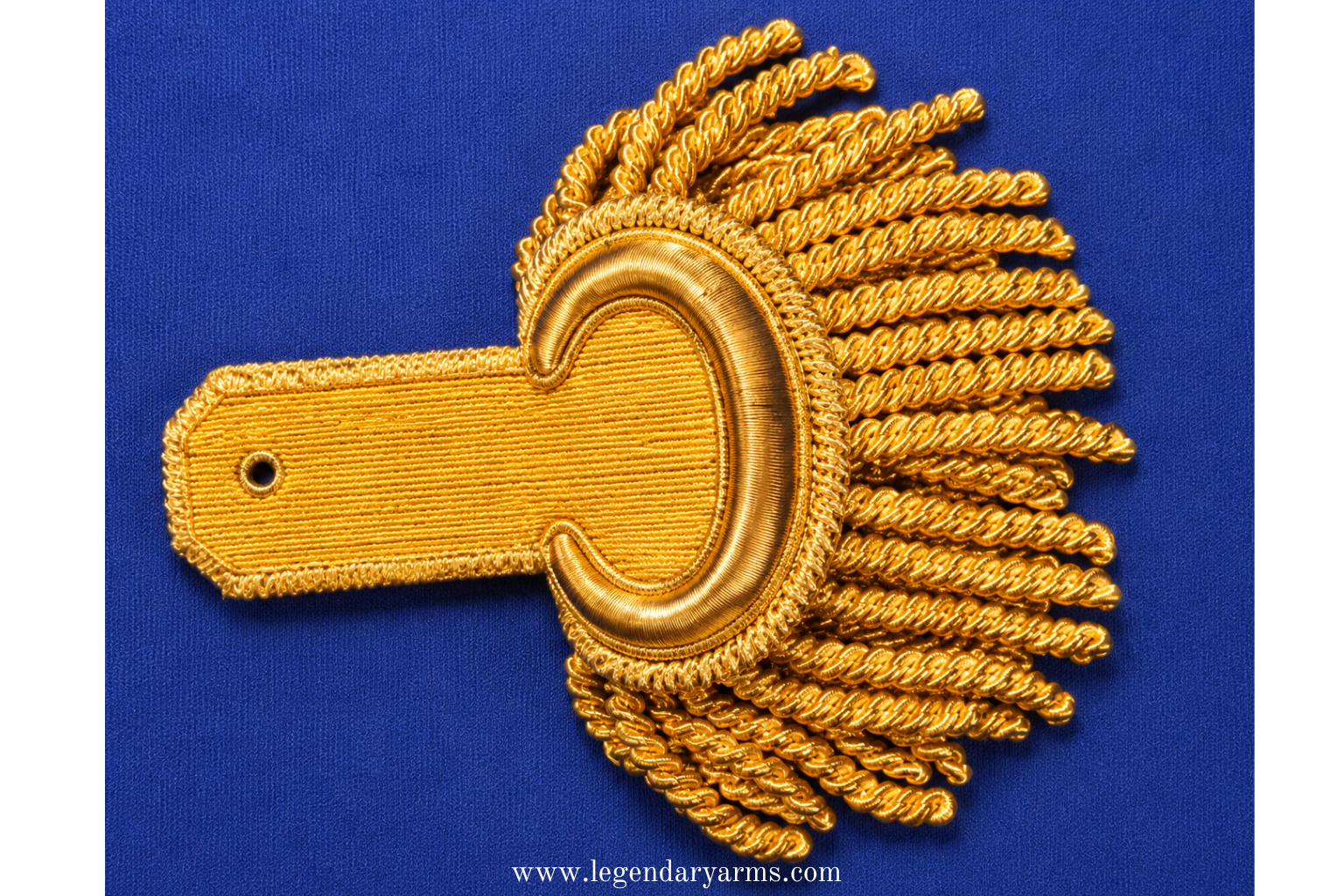
Color carried meaning. Gold generally outranked silver, though exact conventions varied between Union and Confederate regulations and shifted over the course of the war. Gold epaulettes were typically reserved for senior officers, symbolizing prestige, authority, and years of earned leadership. Wearing gold on the shoulder was not a casual choice; it reflected military etiquette that governed nearly every aspect of an officer's appearance. Rank came with expectations of conduct, and uniform details like these reinforced that responsibility publicly. This symbolism has outlasted the war itself. Reenactors and collectors continue to favor gold pieces for their historical weight and visual impact, making them a lasting favorite in civil war epaulettes collections today.
How Civil War Epaulettes Were Made
Original epaulettes were crafted from materials built to last and built to impress. Brass frames provided structure, while gold bullion and metallic thread created the shine associated with officer rank. Skilled embroiderers worked the fringe and shoulder scales by hand, a process that demanded patience and precision. Fringe construction alone could take hours, with each strand individually shaped and secured. This handmade craftsmanship is exactly what today's collectors look for in a quality reproduction. Anyone shopping for epaulettes to complete a Civil War uniform should pay attention to how closely the materials and techniques mirror these original methods, since authenticity often comes down to construction, not just appearance.
Why Civil War Epaulettes Are Still Popular Today
Interest in Civil War epaulettes has never really faded. Reenactors rely on them to complete historically accurate uniforms for living history events. Military historians and museums use them as reference pieces or display items. Collectors seek them out for their craftsmanship and connection to a defining period in American history. Cosplayers and theater productions turn to them for costume authenticity, while educators use them as teaching tools to bring nineteenth-century military life into the classroom. This wide audience keeps demand steady across reenactment communities and historical circles alike. Our Civil War Epaulettes – Gold were designed with all of these uses in mind, offering the detailing serious buyers expect without sacrificing the comfort needed for long events or performances.
Choosing Authentic Civil War Epaulettes for Your Collection
A few factors separate a quality pair of epaulettes from a costume-store imitation. Historical accuracy matters first, from the shape of the shoulder scale to the fringe length. Material quality follows closely behind; bullion and metallic thread should hold their shine and resist unraveling. Check the finish and stitching for consistency, since uneven work usually signals mass production over craftsmanship. Comfort and durability matter too, especially for reenactors wearing them through a full day of events. Decide whether you need a matching pair or a single piece, and consider how well your uniform epaulettes will pair with the rest of your kit or costume. Paying attention to these details ensures your collection reflects the same standards officers once demanded of their own uniforms.