
When Did the American Civil War Start? The Complete Timeline
If you ever sat in a history class wondering how a country tears itself apart, the American Civil War is your answer. It's one of those events that feels almost impossible to fully wrap your head around — hundreds of thousands of lives lost, families split in two, and a nation forced to decide what it actually stood for.
But before we get into all of that, let's answer the question you're probably here for: the American Civil War officially started on April 12, 1861, when Confederate forces attacked Fort Sumter in South Carolina. That's the date historians point to. That's when the shooting started.
The real story, though, is messier and more fascinating than a single date. The war didn't just show up one spring morning out of nowhere. It had been simmering for decades — through bad politics, broken compromises, and a country that kept kicking its biggest problem down the road. This article walks you through the whole thing, from the early warning signs to the moment the first cannon fired.
What Caused the American Civil War?
Here's the honest answer: slavery. That's the root of it.
Now, people will sometimes say the Civil War was about "states' rights" or "economic differences" — and those things were real. But what were those states fighting to preserve? What economic system were they defending? Enslaved labor. The two things can't be separated.
The Southern states had built their entire economy around plantation agriculture, and that agriculture depended on enslaved people doing the work. The Northern states had moved toward industry and manufacturing, and the abolitionist movement there was growing louder every year. These weren't just political disagreements — they were two completely different visions of what America should look like.
And the bigger the country got, the worse the tension became.
Every time new land was added out west, the same ugly fight broke out: would slavery be allowed there or not? Congress kept trying to find the middle ground:
- The Missouri Compromise in 1820 drew a line across the country — slavery stays south of it, freedom stays north. It held for a while.
- The Compromise of 1850 tried to settle things again with a complicated bundle of laws. It didn't really work.
- The Kansas–Nebraska Act in 1854 was supposed to let territories vote on the issue themselves. Instead, it turned Kansas into a war zone, with pro-slavery and anti-slavery settlers clashing in what people started calling "Bleeding Kansas."
Every so-called solution just delayed the inevitable
The Events That Led to the Start of the Civil War
The Election of Abraham Lincoln in 1860
If there was one moment that pushed the South over the edge, it was Abraham Lincoln winning the presidency in November 1860.
Lincoln wasn't an abolitionist in the way many people picture — he wasn't calling for the immediate end of slavery everywhere. But he was firmly against letting it spread into new territories. For the South, that was enough. If slavery couldn't grow, they believed the whole system would eventually collapse.
And here's what made it worse: Lincoln won without a single Southern state voting for him. Not one. To many Southerners, that felt like proof that the federal government was no longer on their side — that they had lost their voice in their own country.
When Southern States Started Leaving
South Carolina didn't wait around. Just six weeks after Lincoln's election, on December 20, 1860, it voted to leave the United States.
Then came the dominos. Mississippi, Florida, Alabama, Georgia, Louisiana, and Texas all followed within the next two months. By February 1861, they had formed their own government — the Confederate States of America — with Jefferson Davis as their president.
Think about what that actually means. A group of states declared themselves a separate country. They had their own president, their own flag, and they were dead serious about it.
The Tension Builds at Fort Sumter
Here's where things got really dangerous.
When Southern states seceded, there were still federal military forts sitting inside Confederate territory. The most tense situation was at Fort Sumter — a Union garrison sitting right in the harbor of Charleston, South Carolina, the very heart of the secession movement.
Confederate leaders told the Union to hand it over. Lincoln said no and ordered supply ships to keep the fort running. Both sides knew a confrontation was coming. It was just a matter of who moved first.
When Did the American Civil War Officially Start?
The Attack on Fort Sumter — April 12, 1861
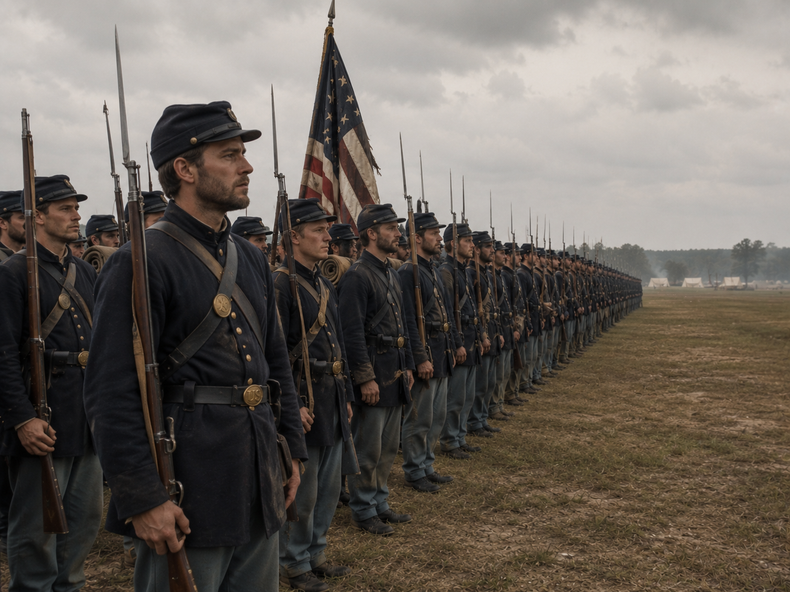
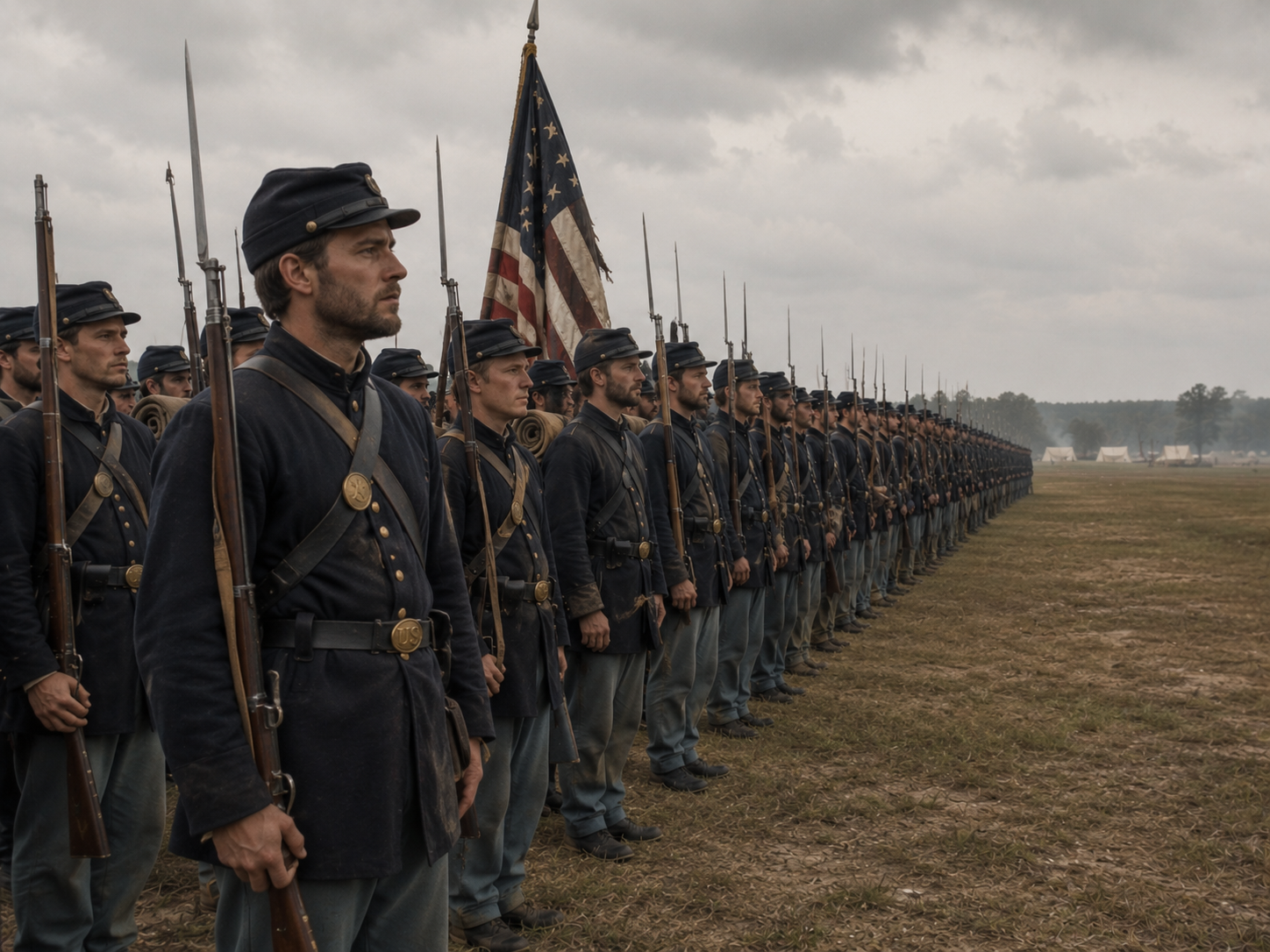
At 4:30 in the morning on April 12, 1861, Confederate cannons opened fire on Fort Sumter.
The bombardment went on for about 34 hours. The Union soldiers inside were badly outnumbered and had no real chance of holding out. They surrendered the next day. Remarkably, no one was killed in the actual battle itself — the first deaths would come later — but this moment is recognized as the official beginning of the American Civil War.
Why this moment specifically? Because it was the point where there was no going back. Political arguments could be argued out. A military attack on a federal installation? That forced everyone to choose a side.
Lincoln's Response
Lincoln didn't hesitate. On April 15, 1861 — just three days after the attack — he called for 75,000 volunteers to join the Union Army. The response across the North was immediate. People were ready to fight.
But Lincoln's call to arms also pushed more states toward the Confederacy. Virginia, Arkansas, Tennessee, and North Carolina all refused to send troops against the South and joined the Confederate side. Just like that, the war everyone had been pretending could be avoided was fully, officially underway.
A Complete Timeline of How It All Unfolded
Sometimes it just helps to see the whole thing laid out clearly:
| Year |
What Happened |
| 1820 |
Missouri Compromise tries to manage the slavery debate as the U.S. expands west |
| 1850 |
Compromise of 1850 patches over tensions — temporarily |
| 1854 |
Kansas–Nebraska Act lets territories vote on slavery, sparking violent conflict |
| 1857 |
Dred Scott Decision rules Congress has no power to ban slavery in new territories |
| 1859 |
John Brown's raid on Harpers Ferry shocks the South and hardens opinions on both sides |
| 1860 |
Lincoln wins the presidency; South Carolina votes to secede |
| Early 1861 |
Six more states leave the Union; the Confederacy is formally established |
| April 12, 1861 |
Confederate forces attack Fort Sumter — the Civil War begins |
Conclusion
So, when did the American Civil War start? Officially, April 12, 1861, at Fort Sumter. That's the date in the history books, and it's the right one.
But if this article has shown you anything, it's that the war was already well underway long before the first shot was fired — in courtrooms, in Congress, in the fields of Kansas, and in the growing fury of a country that couldn't agree on its most fundamental values.
The American Civil War wasn't just a military conflict. It was a reckoning. And understanding how it started — really understanding it, not just memorizing a date — matters because the questions it raised about equality, justice, and what kind of country America wanted to be never fully went away.
That's what makes it one of the most important chapters in American history. And honestly, why it's still worth understanding today.