
Civil War Reenactment Gear: What You Actually Need vs. What You Don’t
There is a moment almost every new Civil War reenactor experiences. You arrive at an event, look around the camp, and realize that everyone seems to have something you don't.
One person has a carefully assembled uniform. Another has a haversack that looks as though it has been through a dozen campaigns. Someone else has a complete camp setup, from blankets and cookware to equipment hanging neatly beside the tent.
It can make getting started seem expensive and complicated.
It doesn't have to be.
Building a convincing Civil War impression isn't about buying every piece of equipment you can find. It starts with understanding who you're portraying, what that person would have worn and carried, and which items actually matter to your impression. From Civil War reenactment uniforms to field equipment and camp supplies, knowing what to buy first can save you money and help you create a more authentic setup.
Start With Your Historical Impression
Before buying Civil War reenactment gear, decide who you want to portray. This single decision will shape almost everything else you purchase.
A Union infantryman, Confederate soldier, officer, civilian, or nurse would have had different clothing and equipment. Even soldiers serving in the same army could have different appearances depending on their regiment, rank, location, supply situation, and the year of the war.
That's why research should come before shopping.
If you belong to a reenactment group, ask experienced members what they recommend. Some groups focus on a particular regiment, campaign, or period, while others allow a broader interpretation. Their guidance can help you avoid buying equipment that looks historically appropriate but doesn't belong with your chosen impression.
Once you know who you're portraying, the shopping list becomes much easier to understand.
Your Uniform Is the Foundation
For most military impressions, the uniform is the best place to start. Civil War reenactment uniforms typically include a coat or jacket, trousers, shirt, headwear, and suitable footwear, but the right combination depends on the soldier, unit, and period you are portraying.
There was no single look that represented every Civil War soldier. Union uniforms became increasingly standardized as the war progressed, while Confederate soldiers often faced shortages that resulted in greater variation in clothing. Local production, available materials, rank, and location could all influence what a soldier wore.
Small details can make a noticeable difference, too. Civil War rank insignia, buttons, jacket patterns, headwear, and other uniform details can help distinguish a private from an officer and one historical impression from another. For a first-time reenactor, it is usually better to choose one well-researched uniform that matches your impression than to buy several pieces simply because they look appealing.
Add Equipment That Has a Purpose
Once your clothing is sorted, you can start building your Civil War reenactment equipment.
Rather than thinking of equipment as a collection of accessories, think about what a soldier actually needed. He had to carry food and personal belongings, stay supplied with water, and transport the items required for military life.
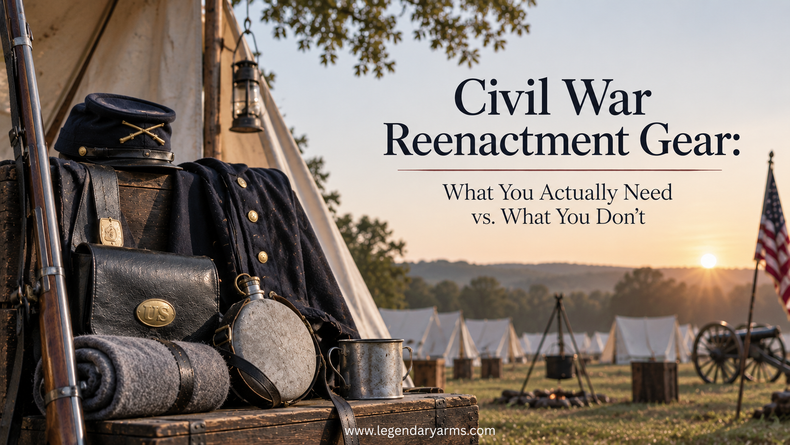
A basic field setup might include:
-
A period-appropriate belt and buckle
-
Canteen
-
Haversack
-
Cartridge box or suitable equipment pouch
-
Blanket or bedroll
-
Appropriate headwear and footwear
Each piece served a practical purpose.
A haversack could hold provisions and personal necessities. A canteen provided water during marches and daily duties. A blanket was useful for sleeping in camp and could be rolled for transport.
Understanding these functions makes the equipment more than something you wear for appearance. It helps you understand how soldiers actually lived.
Don't Forget Camp and Personal Supplies
Some of the most useful Civil War reenactment supplies aren't necessarily the most noticeable.
If you're attending a weekend event, you'll need to think about sleeping, hygiene, weather, and spending long hours outdoors. Bedding, spare clothing, water, and basic repair supplies can make the experience much more comfortable.
Modern necessities can still have a place. Many reenactors simply keep them out of sight or use discreet storage while maintaining a period-appropriate appearance around camp.
That balance is important. Reenacting is about stepping into history, but you're still a modern person spending a weekend outdoors.
What You Don't Need to Buy Right Away
The easiest way to overspend is to assume that you need everything before your first event.
You don't.
You probably don't need multiple uniforms, an elaborate officer's setup, or every accessory associated with Civil War soldiers. You also don't need expensive specialist equipment simply because another experienced reenactor has it.
Before buying something, ask yourself:
Does it fit my impression? Will I actually use it? Does my group require it?
If the answer is no, put it on the list for later.
Your first few events will teach you more than a long shopping session ever could. You'll discover which pieces you actually use and which ones looked useful until they spent the entire weekend at the bottom of your gear bag.
Is Used Reenactment Gear Worth Considering?
For beginners on a budget, used Civil War reenactment gear for sale can be a sensible option.
Reenactors often change impressions, upgrade their equipment, or sell pieces they no longer need. Secondhand uniforms, leather accessories, haversacks, belts, and other equipment can therefore be a practical way to build a first kit.
Inspect used equipment carefully before buying. Check the stitching, leather, buckles, hardware, sizing, materials, and general condition. Most importantly, make sure the item suits the historical impression you're creating.
A cheap piece that doesn't fit your impression is still money spent in the wrong direction.
Reenactment Isn't Only About Soldiers
Civil War reenactment also includes civilian impressions, and these require a different approach.
Civil War reenactment clothing for women might include dresses, skirts, blouses, bonnets, shawls, aprons, and other period garments. The right choices depend on the character, occupation, social setting, and year being portrayed.
The same principle applies to civilian clothing as military uniforms: research the person and period rather than simply choosing something that looks old-fashioned.
Let Your Reenactment Group Guide You
Your Civil War reenactment groups can be one of your most useful resources when putting together a kit.
Experienced members have already learned what works, what doesn't, and which details matter for their particular impression. They can also help you understand the expectations of different Civil War reenactment events.
Requirements can vary between events, especially when it comes to uniforms, equipment, camping, and authenticity standards. Checking the rules before buying specialized equipment can prevent unnecessary expenses.
Sometimes the best reenactment advice costs nothing at all. Just ask someone who has been doing it for years.
Build Your Kit One Piece at a Time
A good reenactment kit doesn't need to appear overnight.
Start with your uniform, footwear, headwear, and essential equipment. Attend an event. Pay attention to what you actually use and what experienced reenactors carry. Then improve your kit gradually.
That's where Civil War reproduction gear becomes more meaningful. A reproduction item isn't valuable simply because it looks old. It should make sense within the historical impression you're trying to create.
The same approach applies when looking for Civil War reproduction uniforms for sale. Don't choose a piece simply because it photographs well. Look at its construction, materials, details, and whether it fits the period and impression you're researching.
The Goal Isn't to Own Everything
The most convincing reenactment kit isn't necessarily the one with the most equipment. It's the one where every piece makes sense.
A canteen, haversack, belt, or uniform can tell you something about how people lived, marched, worked, and spent their days during the Civil War.
Start with the essentials, research carefully, and let your Civil War reenactment gear grow with your experience. The more you understand about the person you're portraying, the easier it becomes to recognize what belongs in your kit and what can stay behind.