
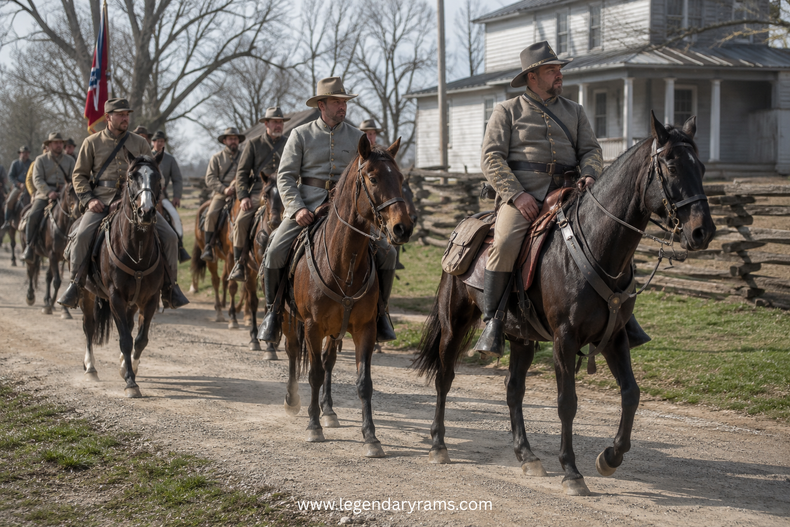
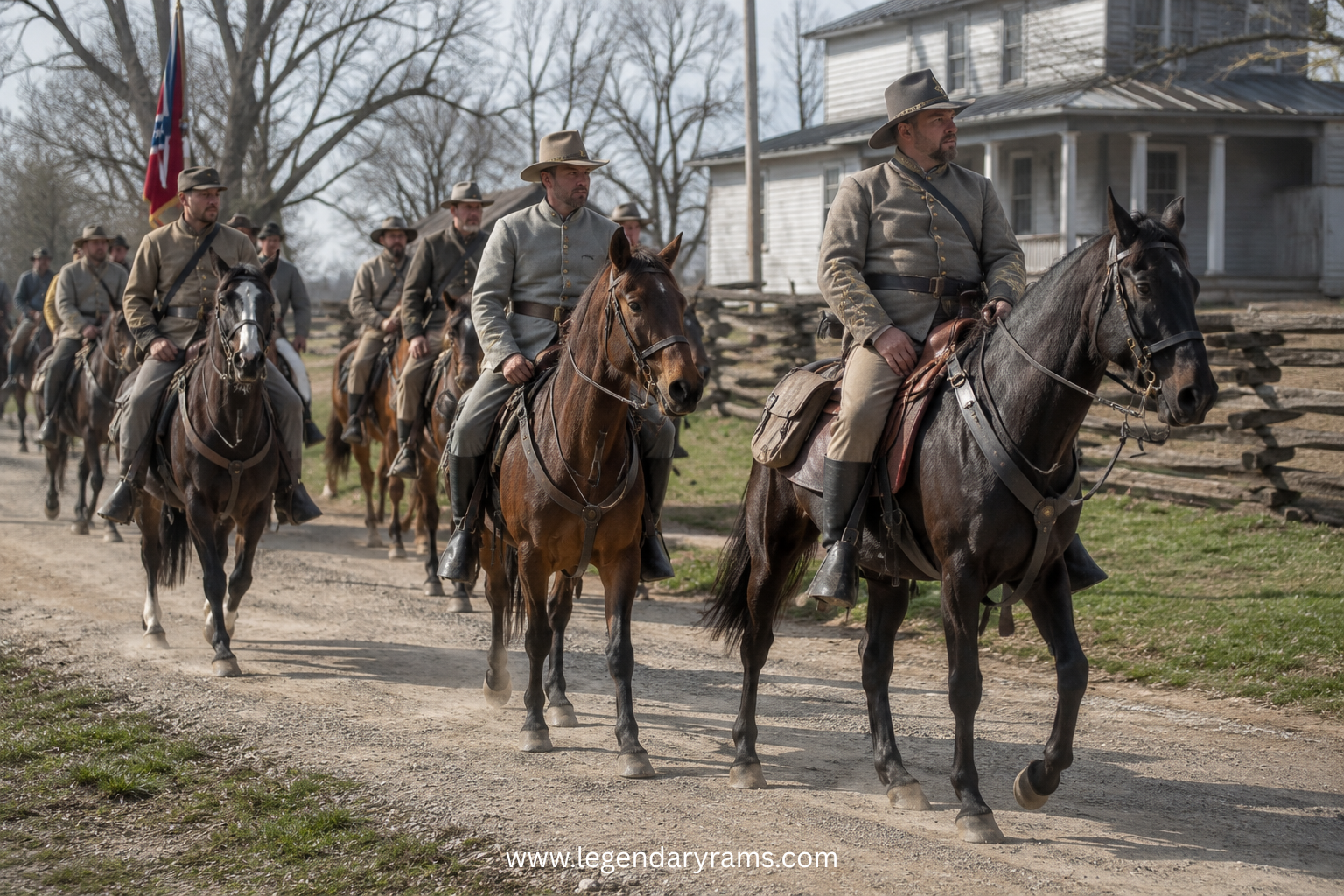
The ground shook before you ever saw them.
That's what the survivors said. Long before the thunder of hooves became something you could name, you *felt* it — a low tremor moving through the earth like a wave breaking just beyond sight. Then they came. Sabers catching the morning light. Horses at full gallop. Riders pressed forward as though gravity itself had chosen a side.
But Civil War cavalry was never just spectacle. What unfolded between 1861 and 1865 — on the ridges of Virginia, the river bottoms of Tennessee, the scorched fields of Georgia — was the moment mounted warfare stopped being what it had always been and became something the world had never quite seen before. The horse soldiers of the Civil War didn't just fight a war. They invented a new way to fight one.
A World Caught Between Two Eras
Every officer on both sides in 1861 had the same mental model: Napoleonic cavalry. Massed charges. Shock and terror. Infantry lines broken by hooves and cold steel. European wars had been won that way within living memory, and West Point had taught those campaigns with reverence.
The Civil War was not a Napoleonic war. It only looked like one from a distance.
The rifled musket had quietly dismantled the old cavalry equation. A well-trained infantryman could now reliably hit a target at 300 yards — three times the range of his grandfather's weapon. The window for a successful mounted charge against formed infantry had collapsed almost to nothing. Early in the war, cavalry paid dearly for commanders who hadn't absorbed that lesson.
What emerged from those brutal early months was something no military establishment had fully anticipated: a horse soldier who used the horse not as a weapon, but as a tool. A means of getting somewhere fast, hitting hard, and vanishing before the enemy could respond.
The Eyes of the Army: Reconnaissance and Intelligence
Long before the first shot was fired in any major engagement, cavalry had already done its most critical work — quietly, in the tree lines and river crossings where a handful of riders could determine the next morning's outcome.
J.E.B. Stuart understood this better than almost anyone. His rides around the Union Army in 1862 weren't audacious stunts. They were intelligence operations, delivering Lee a clear picture of Federal dispositions and supply vulnerabilities at moments when that information was worth more than a division of infantry.
By 1864, Union cavalry had built something even more formidable. Sheridan's troopers screened the Army of the Potomac's movements while simultaneously blinding Lee's commanders to Union intentions. Information had become a weapon — and cavalry controlled who held it.
That principle didn't die with the horse. It simply changed vehicles. The thread runs unbroken from Stuart's Virginia rides to armored reconnaissance doctrine in World War II.
Speed as Strategy: Mobility That Changed Everything
Speed is a kind of violence. An army that arrives somewhere before the enemy expects it has already won half the engagement.
John Buford proved this at Gettysburg on July 1, 1863. Arriving ahead of the infantry with two brigades, he chose his ground on the ridges west of town and held it against Confederate infantry for hours — just long enough for the Army of the Potomac to establish the defensive position that would win the battle. Buford didn't win Gettysburg. He made it *possible* for someone else to.
That capacity — seizing ground, shaping the larger engagement, forcing the enemy to react — became the defining logic of modern mobile warfare. You can trace it directly from McPherson's Ridge to German panzer spearheads in 1940 to American armored cavalry operations in the Gulf. The vehicle changes. The logic never does.
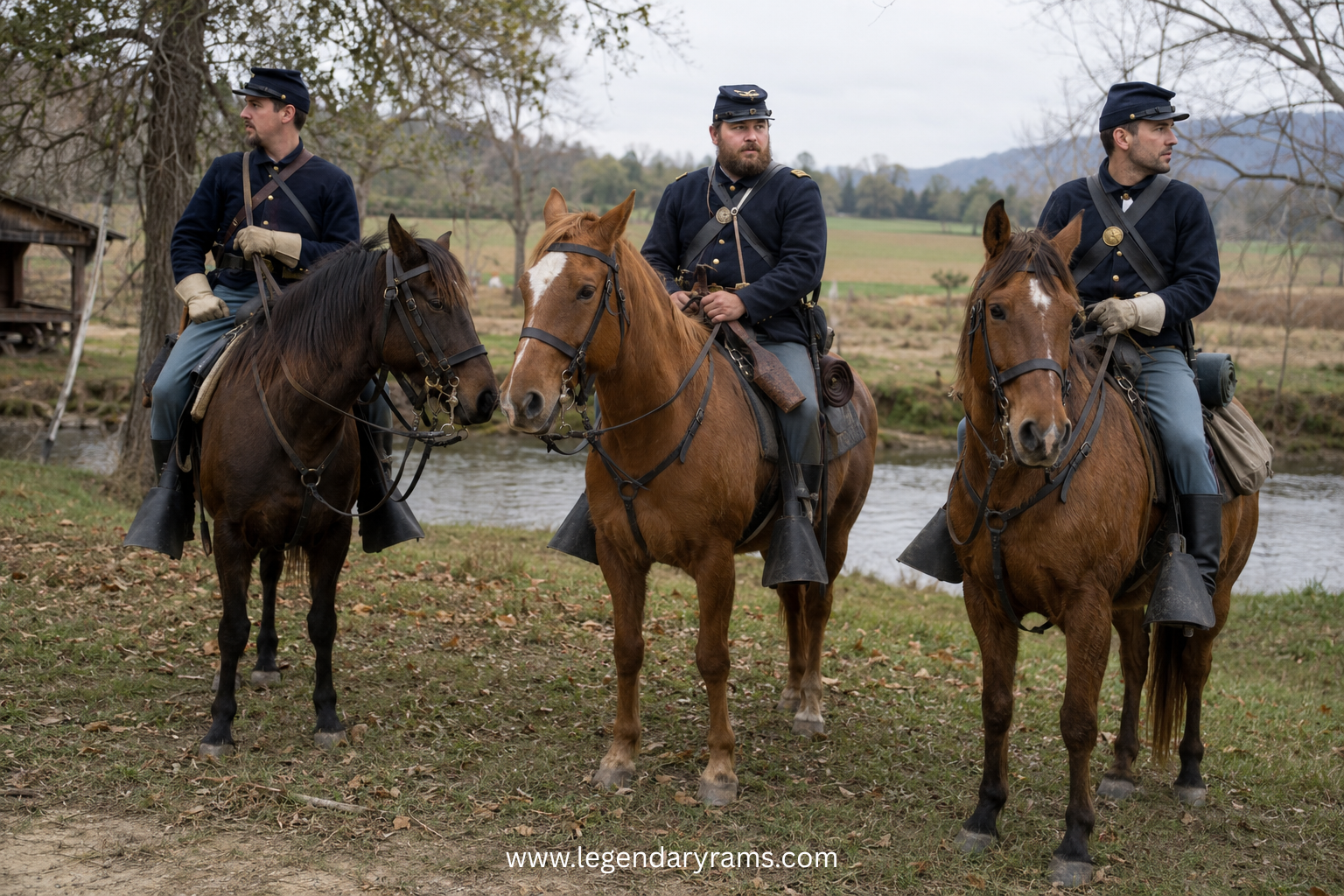
Raids, Disruption, and the War Behind the Lines
Nathan Bedford Forrest never attended a military academy. What he had was an uncanny instinct for making the enemy's war harder — not by defeating armies directly, but by destroying the things armies needed to function.
His campaigns across Tennessee and Mississippi targeted supply depots, railroads, and communication lines. Forrest understood something the formal academies hadn't yet fully articulated: an army fights on its logistics, and an enemy who cannot supply his troops cannot fight them.
Mosby's Rangers in Virginia operated on the same principle. So disruptive were they to Union supply lines that entire Union regiments were diverted to chase them — troops that could have been used elsewhere. This is the direct ancestor of the deep-penetration raid and the special operations strike. When Allied aircraft in World War II targeted German rail infrastructure, they were executing — at altitude and industrial scale — the same logic Forrest had worked out on horseback.
The Soldier Who Fought on Foot
The most consequential tactical shift Civil War cavalry made was the willingness to dismount.
It sounds obvious. It wasn't. Dismounting meant surrendering mobility, leaving horses with handlers, reducing effective strength by a quarter. But it meant cavalry could fight in terrain that was useless to mounted troops — forests, broken ridges, rocky ground — and hold it.
When the Union cavalry adopted the Spencer repeating carbine in 1863, dismounted fighting became something genuinely formidable. At Yellow Tavern and throughout Sheridan's Shenandoah Valley campaign, Federal troopers on foot generated rates of fire that staggered Confederate infantry commanders. Mobile soldiers, lightly equipped, arriving fast and fighting effectively without horses — that template became the foundation for airborne troops and special operations forces in the century that followed.
What the Horse Soldiers Left Behind
The last Confederate cavalry dissolved into the exhausted Southern countryside in 1865. The great Union regiments mustered out, returned their horses, and went home. Most people assumed the age of the horse soldier was finished.
They were right about the horse. They were wrong about everything else.
What Civil War cavalry left behind wasn't a fighting arm. It was a way of thinking — about speed, surprise, disruption, and the power of a mobile force to shape an enemy's options before the main battle is even joined. That thinking became tanks. Then aircraft. Then airborne divisions and special operations commands. Each one an inheritor of lessons written not in European academies but in the dust of Virginia farm roads and the river crossings of the Western Theater.
The horse soldiers didn't just fight a war. They wrote the opening chapters of every mobile campaign that followed.
That thunder in the ground — it never really stopped.