
Weapons of the Civil War Cavalry: Sabers, Carbines, and Revolvers Explained
The Weapons Behind Cavalry Effectiveness
Cavalry units were among the most dynamic forces in the American Civil War. Known for their speed and mobility, they played a vital role in shaping the outcomes of many american civil war battles. But while horses gave them movement, it was their weapons that gave them power.
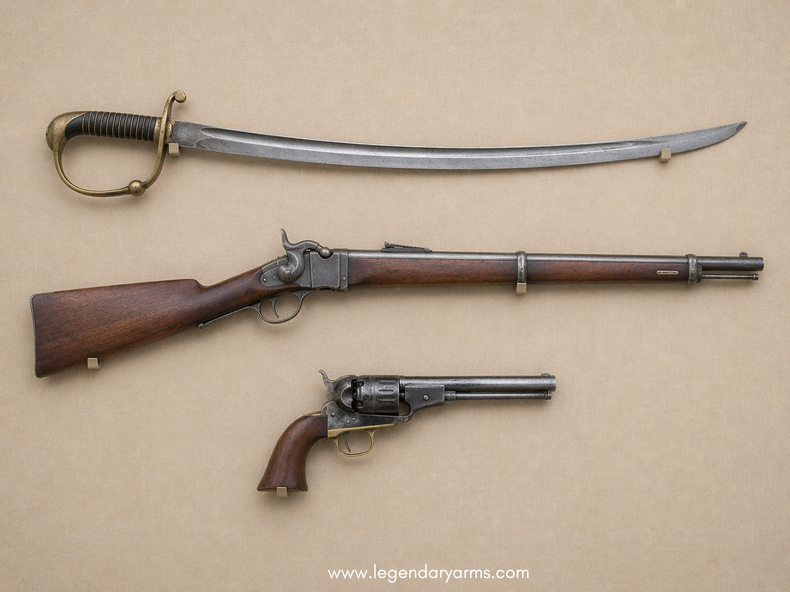
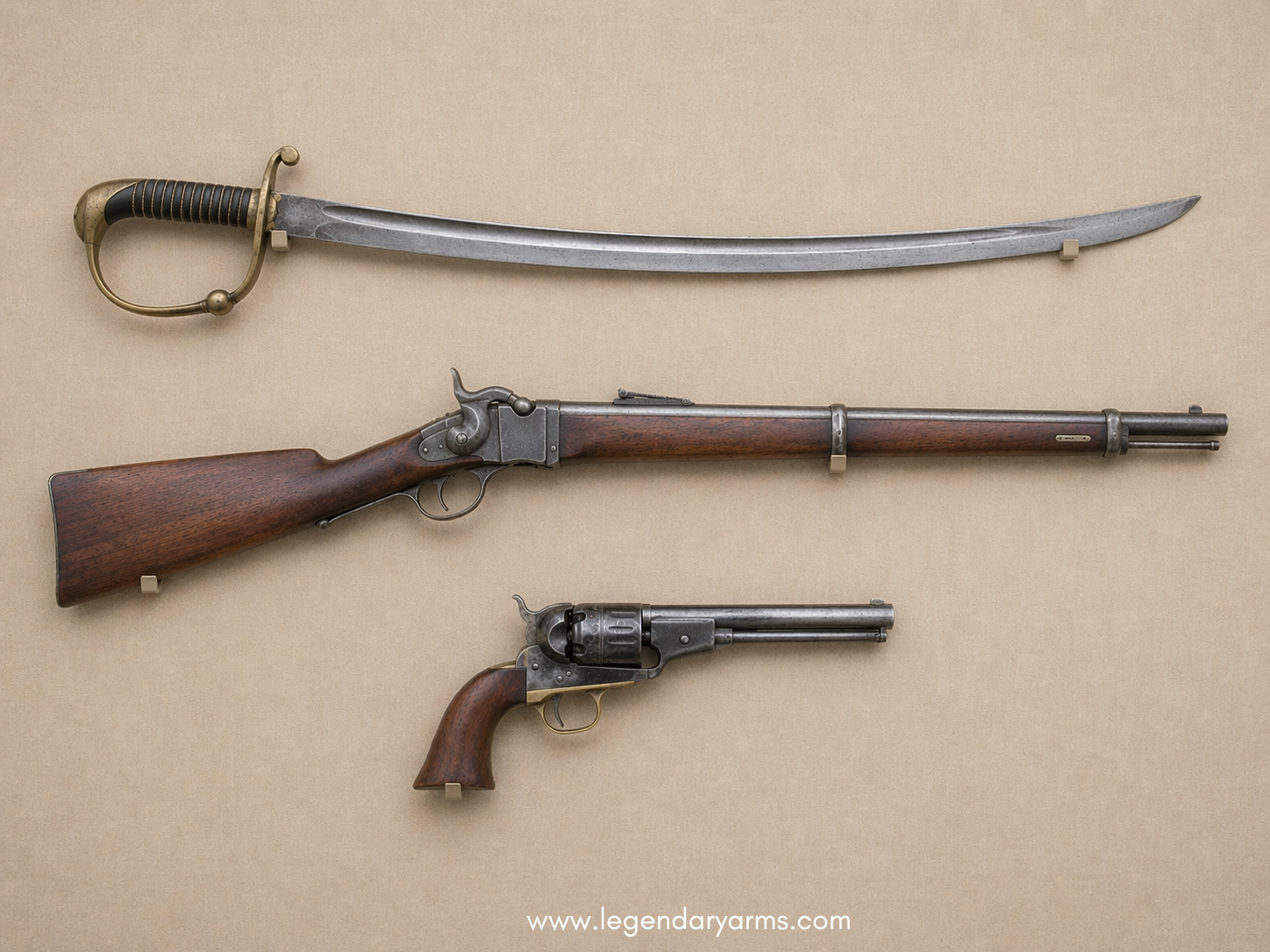
Unlike infantry soldiers who relied mainly on long rifles, cavalry troops needed a versatile set of weapons that worked in multiple situations—while riding, dismounting, charging, or retreating. This need led to the widespread use of three key weapons: sabers, carbines, and revolvers.
Each weapon served a specific purpose, and together they created a balanced system of offense and defense. Understanding these weapons not only helps explain cavalry tactics but also offers deeper insight into american civil war history and how warfare evolved during this period.
The Saber: A Symbol of Tradition and Close Combat
The saber was one of the most iconic weapons carried by cavalry soldiers. With its curved blade and lightweight design, it was built for slashing attacks during mounted combat. For centuries, cavalry units across the world had relied on swords, and the American Civil War was no exception—at least in its early stages.
In the beginning, saber charges were still used as a traditional tactic. Cavalry units would charge at enemy lines with speed and force, attempting to break formations and create confusion. These dramatic moments became some of the most recognizable scenes associated with american civil war battles.
However, the reality of the battlefield quickly began to change.
As more advanced american civil war weapons—especially rifled muskets—became common, charging directly into enemy fire became increasingly dangerous. Soldiers armed with accurate, long-range firearms could stop a cavalry charge before it even reached its target.
Because of this, the role of the saber gradually shifted. It was no longer the primary weapon of cavalry but remained important in specific situations.
The saber was still used for:
- Close-range combat when firearms were not practical
- Defensive actions during sudden encounters
- Situations where speed and surprise brought soldiers into direct contact
Beyond its practical use, the saber also carried symbolic value. It represented discipline, tradition, and the identity of the cavalry itself. Even as tactics evolved, the image of a mounted soldier wielding a saber remained a powerful symbol in american civil war history.
Carbines: The Weapon That Redefined Cavalry Tactics
If one weapon truly transformed the role of cavalry during the war, it was the carbine.
Carbines were shorter and lighter versions of traditional rifles, making them far easier to handle on horseback. Their design allowed cavalry soldiers to carry firearms without sacrificing mobility—a critical advantage on fast-moving battlefields.
But the importance of carbines went far beyond convenience.
They fundamentally changed how cavalry units fought.
With carbines, soldiers could:
- Engage enemies at a distance without needing to charge
- Fire while mounted or after quickly dismounting
- Hold positions and fight more like infantry when needed
This flexibility allowed cavalry to take on roles that were previously impossible. Instead of relying solely on speed and surprise, they could now participate in sustained combat.
In many american civil war battles, cavalry units used carbines to support infantry, defend key positions, or harass enemy forces from a distance. This made them far more versatile and valuable than before.
Another important advantage of carbines was their ability to adapt to terrain. Whether fighting in open fields, wooded areas, or near supply routes, cavalry could adjust their tactics based on the situation.
This shift marked a major turning point in american civil war history.
Cavalry was no longer just a fast-moving force—it became a flexible fighting unit capable of influencing battles in multiple ways.
Revolvers: Speed, Reliability, and Close-Range Power
While carbines gave cavalry strength at a distance, revolvers provided unmatched effectiveness in close combat.
Revolvers were compact, easy to carry, and capable of firing multiple rounds without reloading after each shot. In the fast-paced environment of cavalry combat, this made a significant difference.
Unlike single-shot weapons, revolvers allowed soldiers to respond instantly in high-pressure situations.
Us civil war revolvers were particularly valuable because they offered:
- Rapid-fire capability during sudden encounters
- Ease of use while riding at speed
- Reliability in chaotic or close-range combat
These qualities made revolvers ideal for raids, ambushes, and quick engagements where timing was critical.
Many cavalry soldiers carried more than one revolver, giving them additional firepower before needing to reload. This practice increased their effectiveness during intense moments of combat.
In situations where cavalry units closed in on the enemy or were caught in tight spaces, revolvers often became the weapon of choice. They allowed soldiers to maintain control even when conditions were unpredictable.
The Power of Combination: Why Cavalry Weapons Worked So Well Together
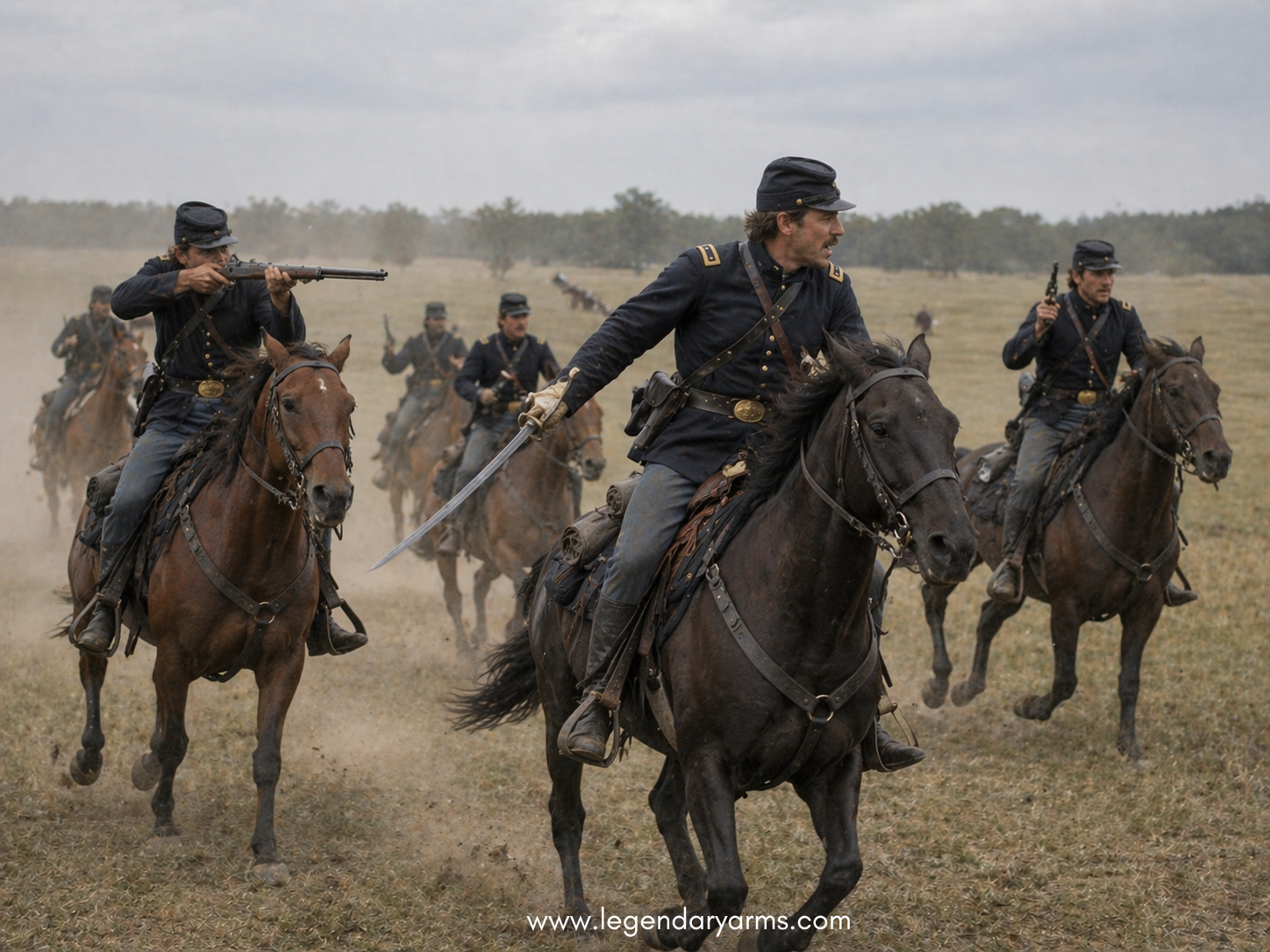
What made cavalry truly effective wasn’t just the individual weapons—it was how they worked together.
Each weapon filled a unique role:
- Sabers handled hand-to-hand combat
- Carbines covered mid- to long-range engagements
- Revolvers dominated close-range encounters
This combination gave cavalry soldiers the ability to respond to almost any situation on the battlefield.
For example, a cavalry unit could:
- Scout an area using carbines for protection
- Engage enemies from a distance
- Move quickly into close range
- Use revolvers or sabers depending on the situation
This level of adaptability made cavalry unpredictable and difficult to counter.
In many american civil war battles, this versatility allowed cavalry to operate independently, carry out complex missions, and respond quickly to changing conditions.
Impact on Civil War Warfare
The introduction and effective use of these weapons significantly expanded the role of cavalry during the war.
They were no longer limited to scouting or delivering messages. Instead, they became active participants in shaping military strategy.
Cavalry units used their weapons to:
- Disrupt enemy supply lines and communication routes
- Conduct deep raids behind enemy territory
- Gather intelligence that influenced major decisions
- Support infantry during key engagements
Because of their involvement in both large battles and smaller operations, it becomes difficult to determine exactly how many civil war battles were fought. Many cavalry actions were not always recorded as formal battles, yet they played a crucial role in weakening enemy forces.
This highlights how important cavalry had become—not just as support, but as a strategic force in its own right.
The Role of Uniforms and Equipment
Weapons alone were not enough to make cavalry effective. How soldiers carried and used their equipment also played a major role.
American civil war uniforms for cavalry were designed to support mobility and endurance. Soldiers needed to move quickly, access their weapons easily, and remain comfortable during long periods in the saddle.
Key features of cavalry gear included:
- Holsters for carrying multiple revolvers
- Straps or slings for carbines
- Lightweight designs for easier movement
This combination of practical clothing and well-organized equipment allowed cavalry soldiers to operate efficiently in demanding conditions.
Their ability to manage weapons, movement, and terrain at the same time made them one of the most capable forces in the war.
Weapons That Changed the Nature of Cavalry
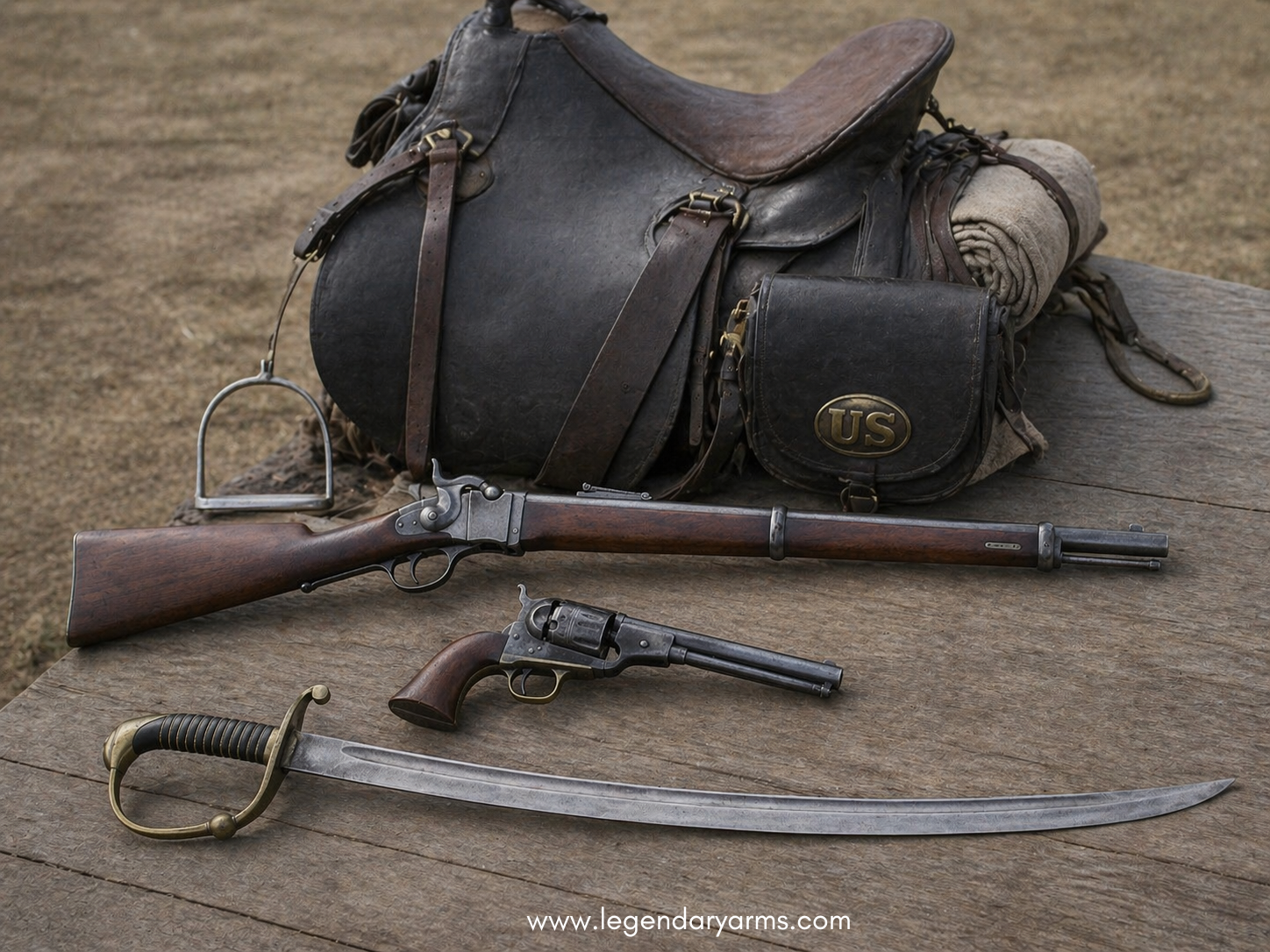
The effectiveness of cavalry during the American Civil War was not just about speed—it was about the intelligent use of weapons.
Sabers, carbines, and revolvers each played a critical role in shaping how cavalry fought and operated. Together, they created a system that balanced tradition with innovation.
These weapons allowed cavalry to:
- Adapt to different combat situations
- Engage enemies at multiple ranges
- Perform both offensive and defensive roles
In the larger picture of american civil war history, cavalry stands as a clear example of how technology and strategy can evolve together.
Their weapons didn’t just support their mission—they transformed it.
And in doing so, they left a lasting impact on the way wars were fought in the years that followed.